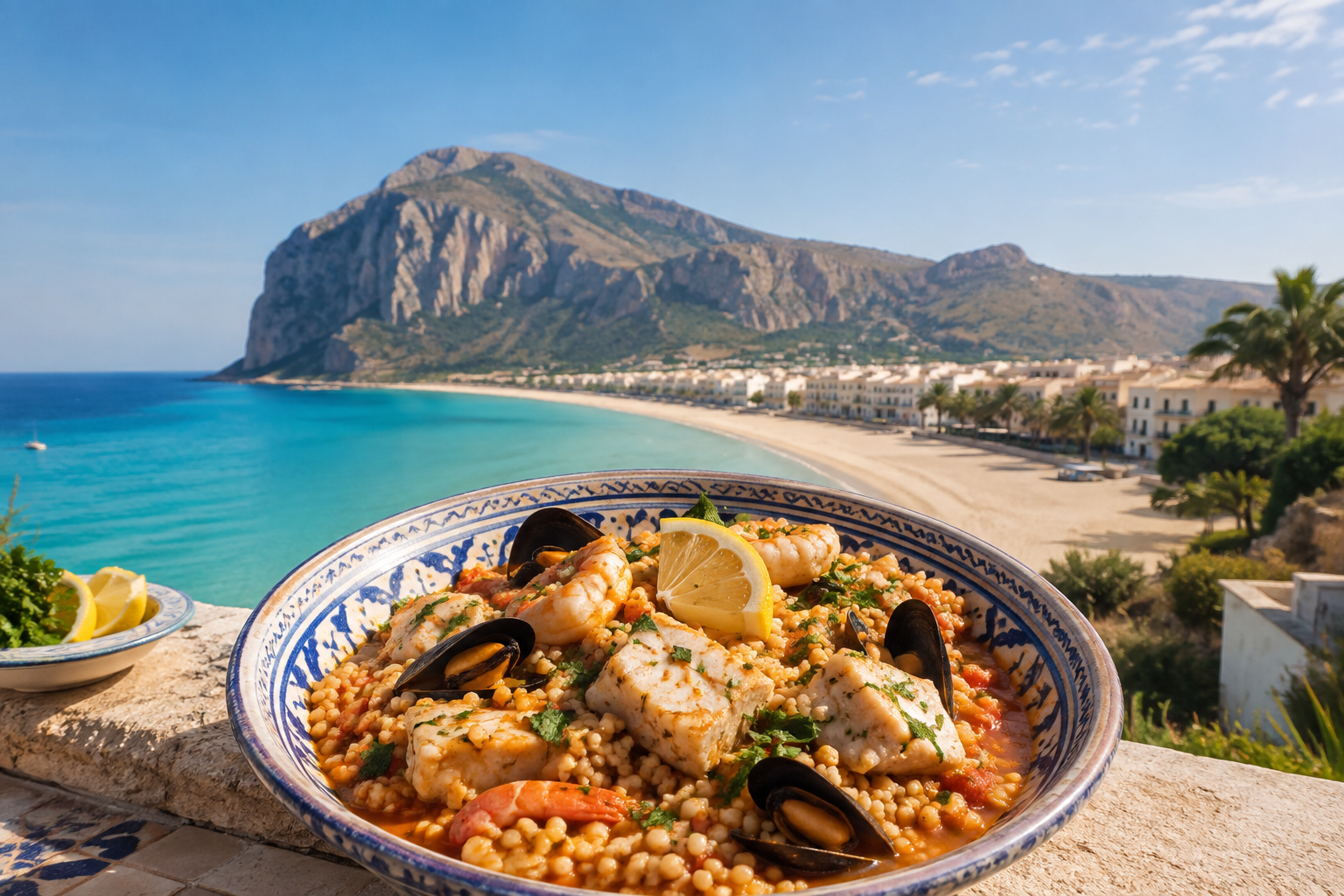
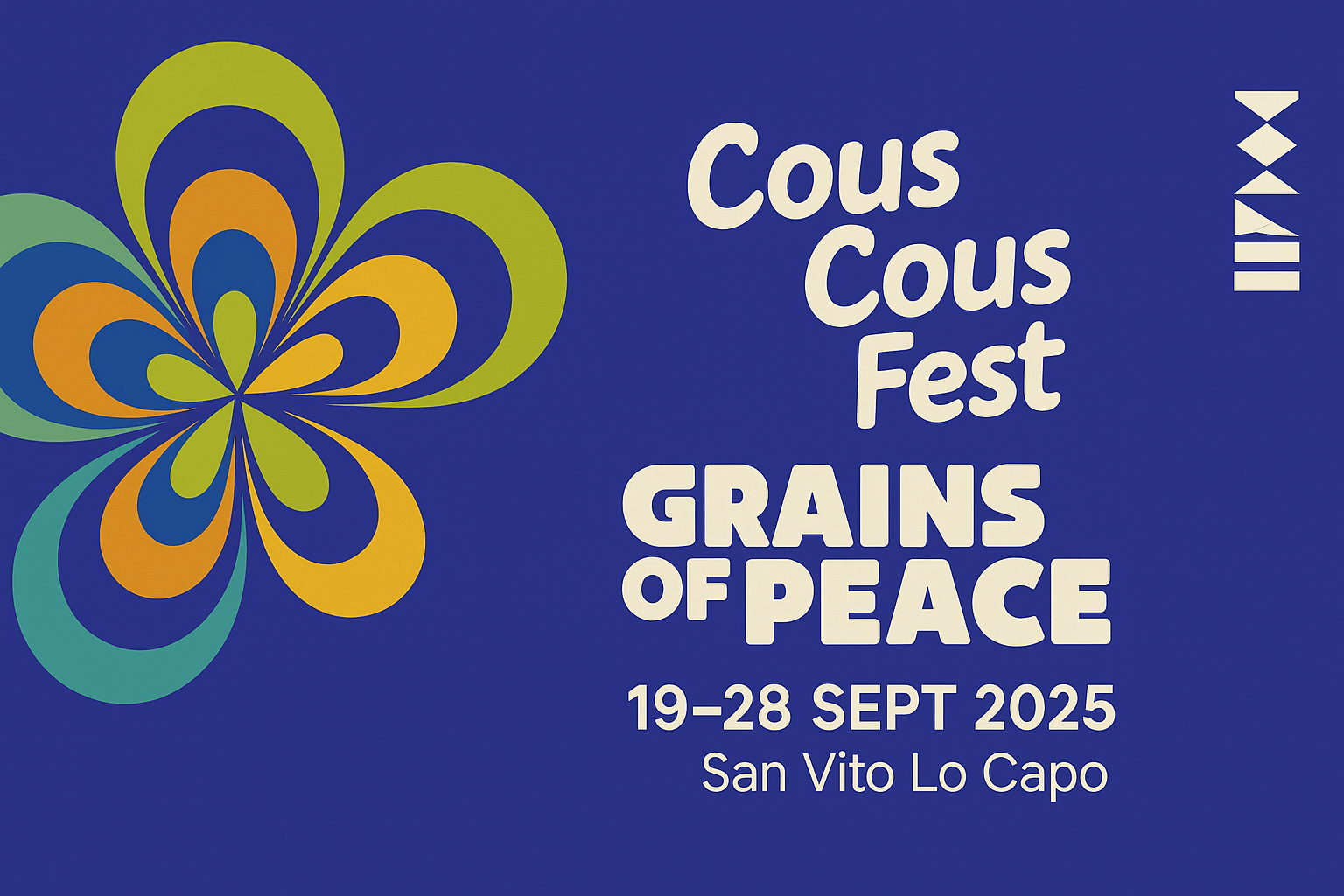
There are places that seem to exist precisely to bring people together, to bridge the gap between different cultures, and to celebrate what we all share: the joy of conviviality, the sea that surrounds us, the scents that fill both kitchens and streets. San Vito Lo Capo, a small gem on the northwestern coast of Sicily, is one of these special places. Every September, its wide golden beach becomes the stage for an event that has long crossed local and national borders: the Cous Cous Fest.
This is not just a food festival: it is a celebration of the Mediterranean, a symbolic embrace among peoples who, though separated by miles of sea, gather around an ancient dish—cous cous. A recipe carrying the flavors of North Africa, the soul of Sicily, and the universal power to bring people together around a shared table.
Imagine arriving in San Vito Lo Capo during those days: the aroma of spices drifting through the alleys, the voices of chefs exchanging ideas over steaming pots, the music filling the evening air, and the vibrant flags of participating countries waving in front of the Sanctuary. The entire village transforms into a vast open-air stage, radiating an atmosphere of warmth, smiles, and curiosity.
The Cous Cous Fest is also a journey for the senses: tasting a Tunisian dish rich with cumin and coriander, then a Sicilian seafood cous cous from Palermo, followed by a contemporary vegetarian variation. Each recipe tells a story, a people, a tradition—brought to life by the skilled hands of both international and local chefs.
But the magic extends beyond the table: fiery sunsets over the sea set the scene for free concerts on the beach, featuring renowned Italian and international artists. Families, young people, curious travelers, and locals sit together on the sand, listening to the music while waves gently roll ashore. It’s a suspended moment in time, when everyday life feels distant and the only thing that matters is savoring the beauty of the present.
That’s why the Cous Cous Fest is not just an event to add to your calendar, but an experience that stays with you. Those who come once often return—because San Vito Lo Capo and its festival offer something beyond tourism. They give authentic emotions, the taste of tradition, and the joy of feeling part of a global community, even if only for a few days.


San Vito Lo Capo: The Bright Heart of the Mediterranean
Arriving in San Vito Lo Capo feels like stepping into a postcard that has come to life. The road descending into the village already offers one of Sicily’s most stunning panoramas: the sea stretching wide ahead, the imposing Monte Monaco watching over the town, and in the distance, a long crescent of white sand that seems endless.
The center is a maze of whitewashed lanes adorned with bougainvillea, where time flows slowly and people greet each other with a smile. Strolling through these narrow streets, you breathe in an atmosphere of simplicity: artisan workshops, small cafés serving fresh granita, and lively squares buzzing with evening chatter. At the heart of the village stands the Sanctuary of San Vito, a church-fortress that once defended locals from pirate raids and today dominates the main square, which turns into a meeting point and celebration hub during the Cous Cous Fest.
The true queen, however, is San Vito Lo Capo’s beach: over three kilometers of golden fine sand, kissed by waters shifting from turquoise to deep blue. It is one of Italy’s most beloved beaches—perfect both for those seeking relaxation under an umbrella and for those who prefer snorkeling and swimming adventures. In September, during the festival, the beach becomes an immense open-air living room: by day families and travelers bask in the sun, while in the evening the space comes alive with music, lights, and aromas drifting from kitchens set up along the main street.
San Vito Lo Capo is not just about the sea: its surroundings offer breathtaking landscapes and outdoor adventures. Only a few kilometers away lies the Zingaro Nature Reserve, a paradise of panoramic trails and dreamlike coves; just beyond, the village of Scopello with its sea stacks and the famous tuna fishery. For trekking lovers, climbing Monte Monaco rewards you with a sweeping view across the coast all the way to Trapani and the Egadi Islands. And don’t forget Macari and Castelluzzo, two hamlets offering spectacular sunsets over the sea, often in complete tranquility away from the crowds.
What makes San Vito Lo Capo truly special is not just its natural beauty, but the sense of hospitality felt everywhere. The locals have turned welcoming guests into an art: you will feel at home, even if you are hundreds of kilometers away from yours. This authentic atmosphere—made of smiles, good food, and Mediterranean rhythm—wins over travelers and brings them back year after year.
San Vito Lo Capo: From Legend to Tourist Destination


The story of San Vito Lo Capo intertwines myth, faith, and nature. Its origins are rooted in legend: it is said that Saint Vito the Martyr, a young Roman patrician fleeing persecution, landed here. According to tradition, he arrived on this bay with his companions Crescenzia and Modesto, bringing the word of the Gospel to the villagers of Conturrana, later buried by a landslide interpreted as divine punishment. From that moment, the place was dedicated to him and gradually became a landmark for pilgrims and travelers.
Yet traces of human presence go back much further: caves and shelters along the coast show that the area was inhabited in prehistoric times. Over the centuries, devotion to the saint grew stronger, and around a small church a settlement began to form. In the Middle Ages, to protect themselves from Barbary pirate raids, the religious building was fortified into a church-fortress: thus was born the Sanctuary of San Vito, with thick walls and defensive structure, still the heart of the village today.
The actual town began to grow between the 18th and 19th centuries, when farming families and fishermen settled permanently around the sanctuary. For a long time, San Vito remained a modest village, dedicated to agriculture, shepherding, and fishing, administratively tied to Erice until the mid-20th century. Only in 1952 did it gain municipal independence, opening the way to its own future.
The real transformation came in the 1970s and 1980s, when seaside tourism in Sicily started to boom. White sandy beaches and crystal-clear waters attracted more and more travelers, while new accommodations appeared—initially small, later more varied. Meanwhile, the nearby Zingaro Nature Reserve became a symbol of protected, untouched nature, increasing the area’s appeal.
In recent decades, San Vito Lo Capo has grown into an international tourist destination: not only sea, but also food and wine, cultural and sporting events, climbing on limestone cliffs, and hiking with breathtaking views. Further momentum came from the Cous Cous Fest, which since the 1990s has placed the town on the world stage, making it not just a place to visit, but an experience to live.
Today San Vito Lo Capo retains its simple Mediterranean soul, while offering modern, high-quality hospitality. It has evolved from an isolated fishing village into an icon of Sicilian tourism, loved by Italian families and international travelers alike seeking sun, sea, and authenticity.
Cous Cous Fest: From Its Origins to Today
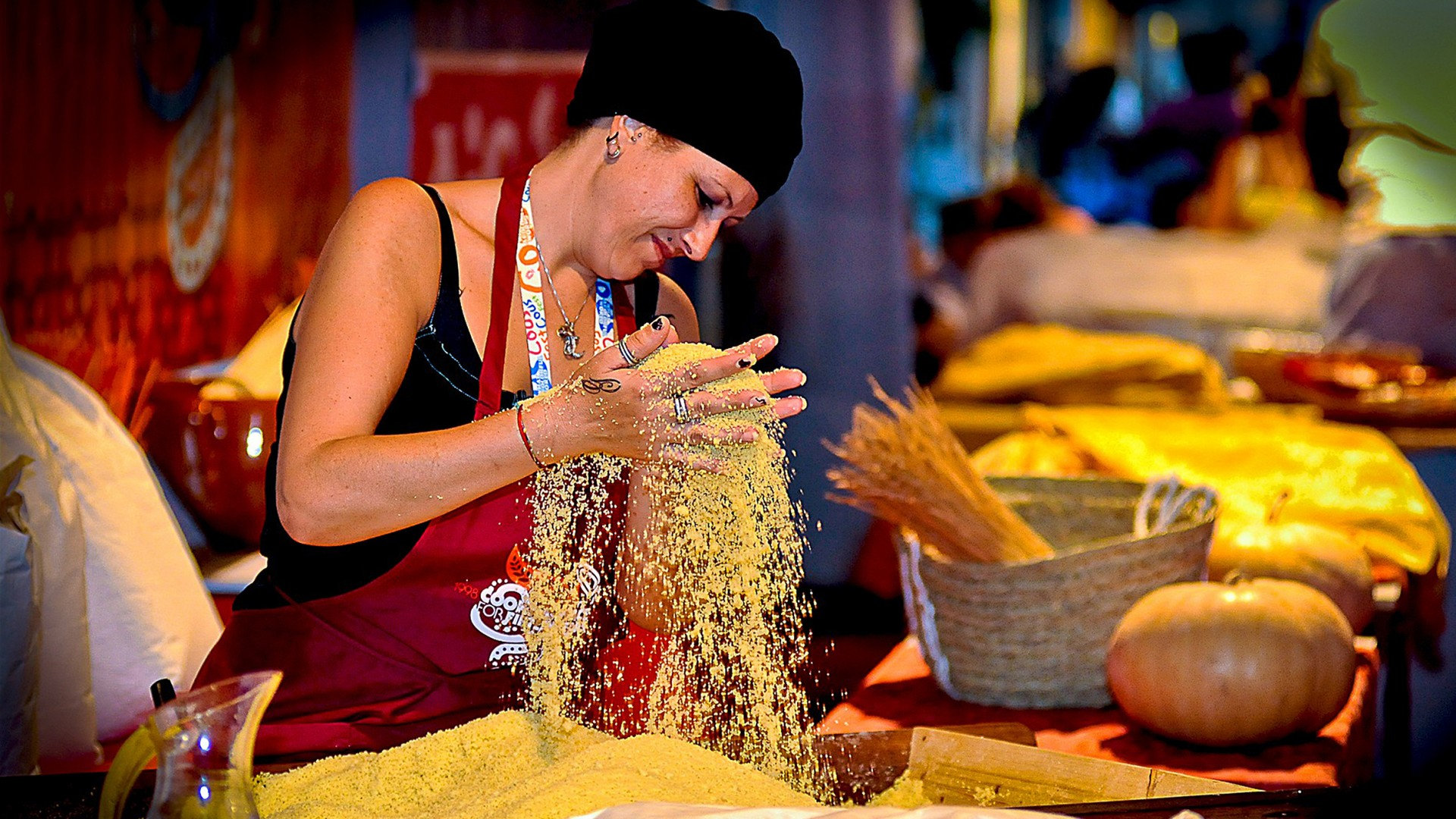
The Cous Cous Fest was born in 1998 from an idea as simple as it was revolutionary: to celebrate cous cous, an ancient and universal Mediterranean dish, as a symbol of integration and dialogue among peoples. At that time, San Vito Lo Capo was already known for its sea and natural beauty, but it lacked an event that could express its most authentic soul—that of a meeting place for cultures. Semolina rolled by hand, enriched with spices, fish, and vegetables, became the guiding thread of a festival that immediately drew the attention of chefs, journalists, and curious travelers.
The very first edition was small in scale, but it already carried something special: bringing around the same table nations often distant in traditions and religions, yet close in gastronomic culture. Chefs from Morocco, Tunisia, Senegal, Palestine, and of course Italy presented their recipes, competing in culinary challenges aimed not only at winning, but above all at sharing.
Over the years, the Cous Cous Fest has grown into one of the most important food and wine events in the Mediterranean. Today it hosts the Cous Cous World Championship, where teams of chefs from every continent compete with semolina and creativity, as well as the Italian Championship, celebrating the culinary excellence of the country.
But the festival is not just about competition: it is an experience engaging all the senses. For ten days, the center of San Vito Lo Capo fills with aromas wafting from the Case del Cous Cous, food stalls where visitors can taste versions from all over the world: from Trapani’s seafood cous cous to vegetarian recipes with vegetables and oriental spices, to African variations rich in intense flavors.
At the same time, the Cous Cous Fest has become a major musical stage: every evening, as the sun sets, the beach comes alive with free concerts by Italian and international artists. Music, like food, becomes a universal language, uniting people regardless of language or origin.
Over time, the festival has known how to adapt and innovate. It has introduced show-cooking sessions, guided tastings of local wines and oils, children’s workshops, and meetings with writers and journalists. The Expo Village has become a showcase for Sicilian crafts and typical products, turning the event into a true fair of Mediterranean culture.
Its strength lies in having preserved its original essence: not just a gastronomic event, but a message of peace, integration, and hospitality. In a world often divided by conflicts and misunderstandings, the Cous Cous Fest shows that a shared dish can become a symbol of dialogue and friendship.
Today, after more than twenty-five editions, the Cous Cous Fest is no longer just a festival—it is an international icon attracting tens of thousands of visitors each year, helping make San Vito Lo Capo not only a seaside destination but also a place of culture and connection.
Tickets & Tastings: How to Make the Most of the Cous Cous Fest
One of the most fascinating aspects of the Cous Cous Fest is that it truly is an event for everyone. You don’t need an entry ticket to soak in the atmosphere: concerts, shows, and evening entertainment are completely free and open to anyone who wants to experience the magic of San Vito Lo Capo during these days. Simply strolling along the main street or heading down to the beach is enough to find yourself immersed in a vast open-air stage of music, colors, and aromas.
But if you really want to savor the full experience, the true heart of the festival is found in the Case del Cous Cous. Here, you can taste recipes from all over the world, prepared by international chefs and served in a convivial, almost family-like atmosphere. For just €12, you’ll enjoy a cous cous dish of your choice, paired with a drink and finished with coffee or a digestif. For those who prefer something a little more sparkling, there’s the €15 option, which includes an Aperol Spritz—perfect for toasting at sunset with your feet almost in the sand.
Alongside tastings, the festival also offers access to its culinary competitions—the real core of the event—hosted at the Bia Theatre in Piazza Santuario. Here, the atmosphere becomes electric as top Italian and international chefs compete with creative, fragrant dishes before a jury of experts and an enthusiastic audience. With tickets starting at €10, you can attend live showcooking sessions, learning secrets and techniques directly from the masters.
The excitement peaks during the grand finals: the Italian Championship and the World Championship of Cous Cous. Tickets for these events range from €20–30 for the former, and €20–50 for the latter, depending on seating and the type of experience included. The best part? You’re not just a spectator: the public gets the chance to taste the competing dishes and cast their vote, becoming an integral part of the festival. It’s a unique moment where passion for food blends with the thrill of international competition.
💡 A valuable tip: seats for finals and the most anticipated showcooking sessions are limited, so it’s wise to book in advance to avoid missing out. That way, you can experience one of the Mediterranean’s most captivating events as a true insider—spoon in hand and spirit open to the world.
Practical Information
How to Get to San Vito Lo Capo
Getting to San Vito Lo Capo during the Cous Cous Fest is part of the journey itself: the road winds through hills, olive groves, and glimpses of the sea that already set the Mediterranean mood awaiting you on arrival.
✈️ By Air
The closest airports are:
- Palermo Falcone-Borsellino (PMO), about 100 km away.
- Trapani Birgi (TPS), about 70 km away.
From both airports, San Vito Lo Capo can be reached by car, private transfer, or bus, with travel times ranging from 1 to 1.5 hours. This is the most convenient option for those arriving from other Italian regions or abroad.
🚌 By Bus from Palermo
If you’d rather travel without a car, there are direct bus connections from Palermo to San Vito Lo Capo, taking around 1h45. Tickets cost between €6 and €9, although frequency may vary depending on the season. It’s a budget-friendly and stress-free choice, allowing you to enjoy the views without worry.
🚗 By Car
- From Palermo: take the E90 highway toward Trapani, exit at Castellammare del Golfo, then continue on the SS187 and finally the SP16 to San Vito Lo Capo.
- From Trapani: head north toward Valderice and then take the SP16, which leads directly into town.
Driving gives you complete freedom to explore the surroundings (like the Zingaro Reserve or Scopello’s sea stacks), though parking during the festival can be tricky.
💡 Practical Tip
On the busiest days of the Cous Cous Fest, it’s best to leave your car in designated parking areas and continue on foot: the town center is easy to walk and closed to traffic in several areas. If you’re arriving by plane or train, plan your transfer or bus early, as demand rises sharply during the festival and tickets sell out fast.
Where to Stay (and When to Book)
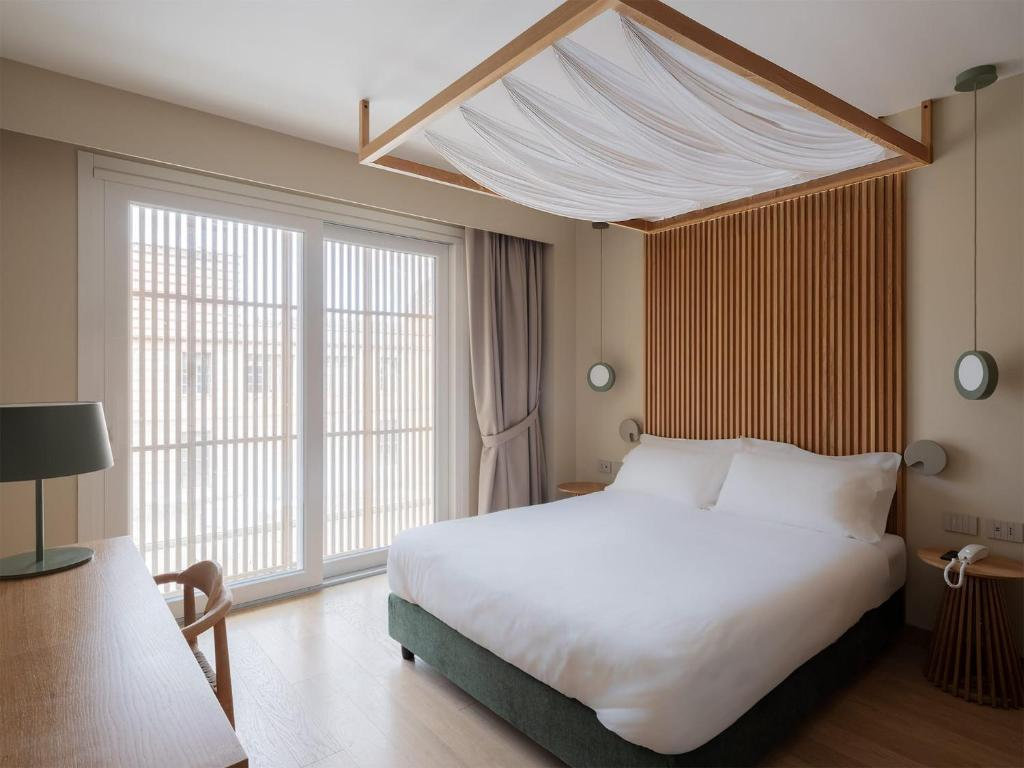
Finding accommodation during the Cous Cous Fest is almost an art form. For ten days, San Vito Lo Capo transforms into a Mediterranean capital: thousands of visitors arrive from Sicily, across Italy, and even abroad. This means one thing—booking early is essential. Latecomers may have to settle for fewer options, often farther away or at higher prices.
🚗 Moving Around by Car and Shuttle: The Winning Choice
The secret to enjoying the festival stress-free is having transport at hand. A rental car is the most convenient option: it allows you to reach San Vito easily, move between events, and discover the wonders of the surroundings—from the Zingaro Reserve to Scopello, all the way to the salt pans of Trapani. Alternatively, dedicated shuttle services run during the festival, especially handy if you leave your car outside the center or are staying in areas connected by buses and transfers.
🏖️ Staying in San Vito Lo Capo
Sleeping in the heart of the village means living the festival at 360 degrees. Step outside your door and you’re already among the Case del Cous Cous, breathing in kitchen aromas, enjoying beachside music, and strolling evening-lit alleys. It’s the perfect option if you want to be at the center of it all—just be ready for higher prices and lively noise late into the night.
🌅 Macari and Castelluzzo: Peace and Stunning Sunsets
Only a few kilometers away, Macari (3 km) and Castelluzzo (10 km) are two hidden gems. Life runs slower here, beaches are less crowded, and sunsets paint postcard-worthy scenes. On one side, turquoise sea; on the other, mountains glowing red at dusk. Staying here means enjoying tranquility while remaining close to the festival’s heart.
🏙️ Trapani, Valderice & Erice: Half an Hour from the Festival
If you can’t find a place in San Vito—or prefer more competitive prices—look just a little farther. Trapani offers a wide range of hotels, B&Bs, and apartments, plus all the services of a lively city. Valderice, halfway between Trapani and Erice, is a peaceful base surrounded by olive groves and hills, ideal if you want to relax after the festival’s excitement. And then there’s Erice, one of Sicily’s most enchanting medieval villages: staying here means wandering cobblestone alleys, artisan shops, and enjoying endless sea views—just a 30-minute drive to San Vito.
🏕️ Campsites and Tourist VillagesFor adventurous travelers, campsites and holiday villages abound both near San Vito and along the coast. They’re ideal for families, groups of friends, or anyone wanting freedom and budget-friendly options.
What to See Nearby


San Vito Lo Capo isn’t just about the beach and Cous Cous Fest: its territory is surrounded by extraordinary places of nature, history, and culture that leave a lasting impression.
🔥 Zingaro Nature Reserve & Monte Cofano
The Zingaro Reserve has long been Sicily’s crown jewel of hiking: 7 km of coastal trails, hidden coves, crystal-clear waters, and the soothing silence of Mediterranean scrub. Sadly, summer 2025 brought a painful wound: a devastating fire destroyed much of the reserve, burning vegetation and signage, making trails unsafe. Both Zingaro and Monte Cofano reserves are currently closed to the public.
But nature is resilient: Zingaro will recover with time. Meanwhile, travelers can enjoy spectacular alternatives such as Macari’s coves, Scopello’s sea stacks, or excursions to the Egadi Islands.
⚓ Tonnara del Secco & Scopello’s Sea Stacks
Two coastal icons, perfect for photography lovers and sunset chasers. The Tonnara del Secco, minutes from San Vito, is steeped in history: once the site of tuna fishing, today it’s a quiet, poetic spot with ruins and boats recalling a vanished world. At sunset, golden light on the sea creates cinematic scenes. Just south, Scopello’s famous sea stacks rise from turquoise waters beside the ancient tuna fishery—one of Sicily’s most photographed landscapes.
⛰️ Monte Monaco
For trekking lovers, Monte Monaco offers an unmissable hike. The trail isn’t long and can be done even by non-experts, but the reward is stunning: a 360° view stretching from San Vito’s gulf to Trapani and Castellammare del Golfo. The best times? Early morning, with pink reflections over the sea, or late afternoon, with fiery sunsets. Bring water and sturdy shoes: the climb is short but steep.
🏰 Erice: The Village Suspended Between Sky and Sea
Erice is pure magic. Perched 750 meters above sea level, it feels like a fairy-tale town. Its cobbled alleys wind among medieval houses, stone arches, and flowered courtyards. Highlights include the Castle of Venus, built on Roman temple ruins, and the Balio Gardens with breathtaking sea views. The Mother Church and its bell tower are other symbols of the town, offering sweeping panoramas.
Don’t miss the culinary delights: genovesi ericine (pastries filled with warm custard) are a must-try in one of the historic bakeries. Erice makes for a perfect day trip, combining history, culture, and indulgence.
🌅 Trapani & Paceco Salt Pans
Descending from Erice, you reach one of Sicily’s most poetic landscapes: the salt pans of Trapani and Paceco. Here, salt has been harvested for centuries through natural sea-water evaporation. Windmills dot the horizon, shallow ponds turn pink at sunset, and white salt mounds shine like sculptures. The best time to visit is sunset, when the colors are pure magic. Don’t miss the Salt Museum inside an old mill, which tells the story of this ancient tradition.
🏝️ The Egadi Islands
From Trapani, ferries take you to the Egadi, three pearls set in transparent waters:
- Favignana, the largest, known for tuna fishing and breathtaking coves like Cala Rossa and Cala Azzurra. Best explored by bike.
- Levanzo, intimate and wild, perfect for peace seekers, with crystalline waters and a tiny whitewashed village.
- Marettimo, the farthest, a paradise of unspoiled nature: mountain trails, sea caves, and spectacular dives make it the most authentic of the islands.
A trip to the Egadi is the best way to enrich your San Vito Lo Capo holiday with adventure and discovery.


The 5 Best Restaurants in San Vito Lo Capo
After a day at the beach or an evening filled with the emotions of the Cous Cous Fest, the most anticipated moment arrives: sitting down at the table. San Vito Lo Capo is a paradise for food lovers, and choosing where to dine can be a small challenge, given the sheer number of restaurants and trattorias. To help you out, we’ve selected five places that truly stand out for food quality, atmosphere, and warm hospitality.
1. Buena Vida Siciliana
📍 Via Dogana 14–26, San Vito Lo Capo – Tel. +39 346 6204960
A name that’s already a promise: you can feel the “good life” in every detail here. It’s an elegant yet relaxed restaurant—perfect for a romantic dinner or for anyone seeking something special during the festival. The cuisine is Mediterranean with modern touches: ultra-fresh fish, flavorful first courses, and a constant eye on presentation. Its position near the sea adds a magical atmosphere that heightens the pleasure of the meal.
2. Ristorante Rais
📍 Via Principe Tommaso 8, San Vito Lo Capo – Tel. +39 340 0902838 / +39 320 8149873
Among the most renowned in town, Rais is synonymous with quality and passion. Fish is the undisputed star: from super-fresh tartares to classic cous cous, every dish celebrates Mediterranean flavors with an elegant, never ordinary touch. The setting is refined without being over the top, and service is attentive and friendly. Ideal for a special evening of signature cuisine paired with a fine Sicilian wine.
3. A Casa di Patrizia
📍 Via Amodeo 14, San Vito Lo Capo – Tel. +39 0923 971169
The essence is in the name: you’ll truly feel “at home” here. The atmosphere is warm and family-like, full of smiles and dishes that smell of authentic Sicily. Simple yet carefully prepared recipes feature fresh, local ingredients that tell the story of tradition: seasonal vegetables, just-caught fish, homemade desserts. Perfect if you’re seeking authenticity and genuineness—away from trends and close to the territory’s true identity.
4. I Siciliani In Cucina
📍 Corso Rinaldo Vigneri 44, San Vito Lo Capo – Tel. +39 0923 971267
A lively, welcoming spot that celebrates Sicily’s most beloved recipes with a pinch of creativity. You’ll find caponata, grilled fish, busiate pasta with rich sauces, along with modern interpretations that surprise without betraying their roots. It’s the right place for a night out with friends, for tasting lots of different dishes, and for soaking up the convivial energy that defines San Vito.
5. Bik Bak Food & Cocktails
📍 Via Savoia 2, San Vito Lo Capo – Tel. +39 0923 970925
For a young, dynamic vibe, Bik Bak is a perfect choice. It’s both a restaurant and a cocktail bar: start with a creative aperitif, continue with a fish-based dish or a more contemporary option, and finish with a carefully crafted drink. The setting is modern and polished—ideal if you want something different from a traditional restaurant.
👉 Final tip: during the Cous Cous Fest, advance booking is essential—tables at these restaurants go fast. If you want to be sure you’ll dine where you prefer, plan your evening ahead of time.
The Flavors of San Vito Lo Capo
San Vito Lo Capo’s cuisine is a journey for the senses: aromas from the sea, vibrant colors that recall the land and sun, intense flavors shaped by centuries of cultural cross-pollination. Few places in Sicily embody the Mediterranean fusion quite like this: Arab influences, Sicilian traditions, and modern creativity.
It’s not just about dishes; it’s about experiences. Every bite is a piece of history: semolina hand-rolled into cous cous, humble bread transformed into pane cunzato, swordfish rolled into aromatic involtini. This is a cuisine born from simplicity, yet always capable of surprising—carried forward by skilled hands and gestures passed down through generations.
Here are five signature recipes you can’t miss during a stay in San Vito Lo Capo—and that, with a bit of effort, you can even try at home.
1. Trapani-Style (San Vito) Fish Cous Cous
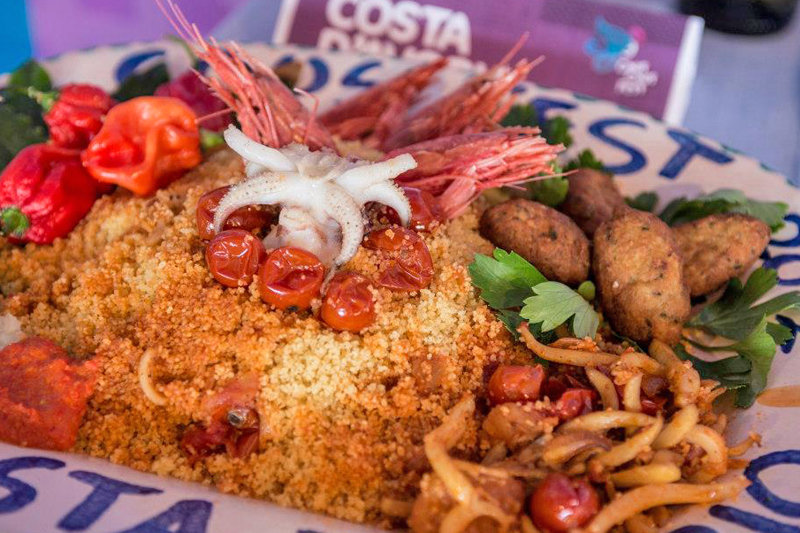
The flagship dish—the very soul of the Cous Cous Fest. The base is semolina hand-rolled with patience into tiny grains, then steamed. (Precooked semolina is common today, but the traditional version is a ritual of conviviality.)The secret lies in the fish broth: scorpionfish, grouper, or other soup fish are cooked with tomato, onion, garlic, tomato paste, and a touch of chili. Some families add saffron or garofano (clove) to deepen the aroma. Once strained, the broth is used to season the cous cous, while the fish soup is served on the side. The result is a rich, aromatic dish that captures all of Sicily in a single bite.
2. Busiate with Trapani Pesto
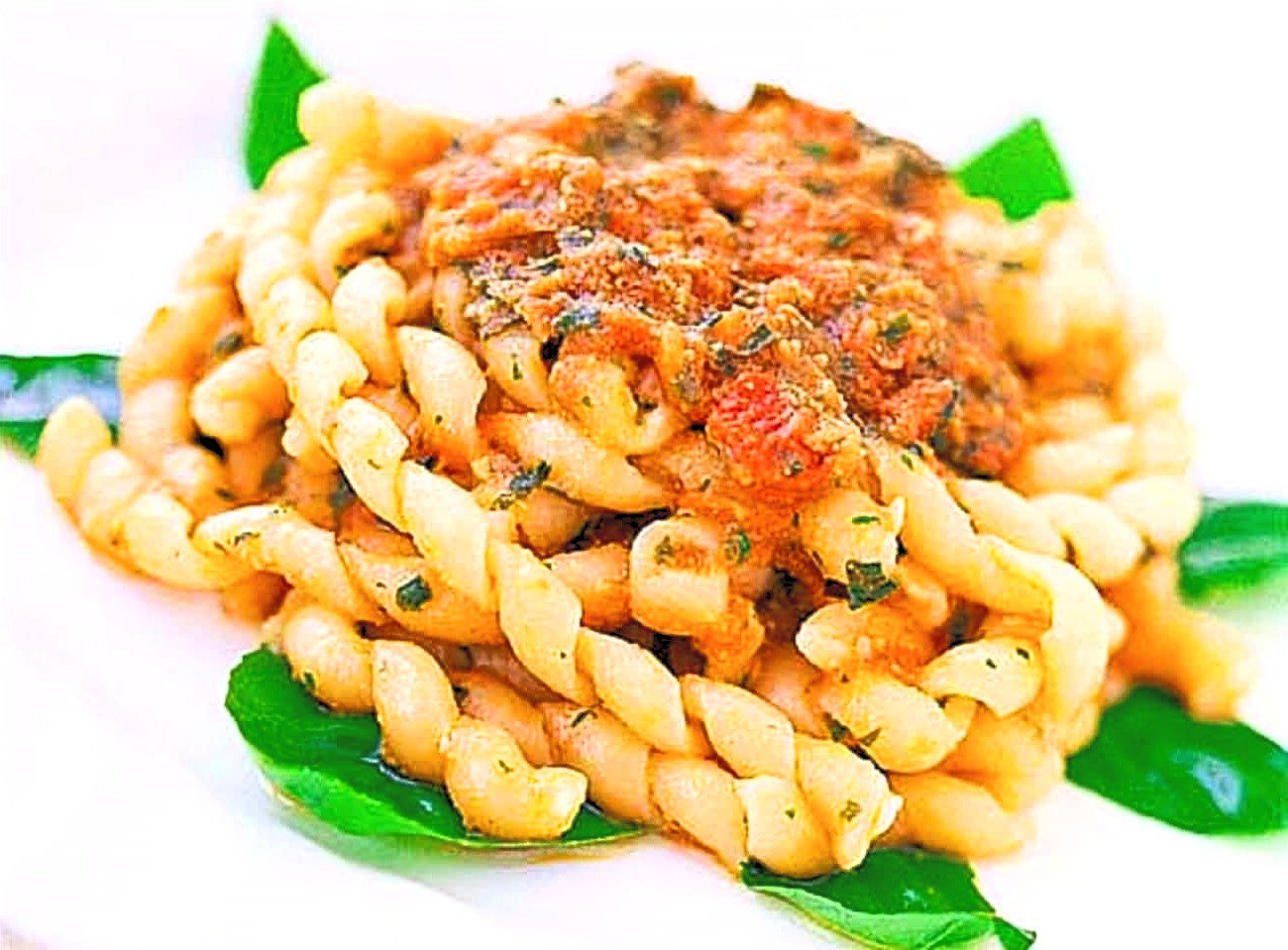
A sun-kissed first course. Busiate—a typical spiral pasta—meets a rustic, fragrant pesto. No mortar in Trapani is unfamiliar with this recipe: peeled almonds, ripe tomatoes, garlic, basil, pecorino, and PDO Valli Trapanesi extra-virgin olive oil.Tradition calls for pounding by hand into a coarse, wonderfully aromatic cream. Many now use a pulse blender for convenience, but the authentic result still comes from slow, manual work. Toss the busiate generously with pesto and finish with pecorino—a simple, irresistible dish that smells of Sicily.
3. Swordfish Involtini
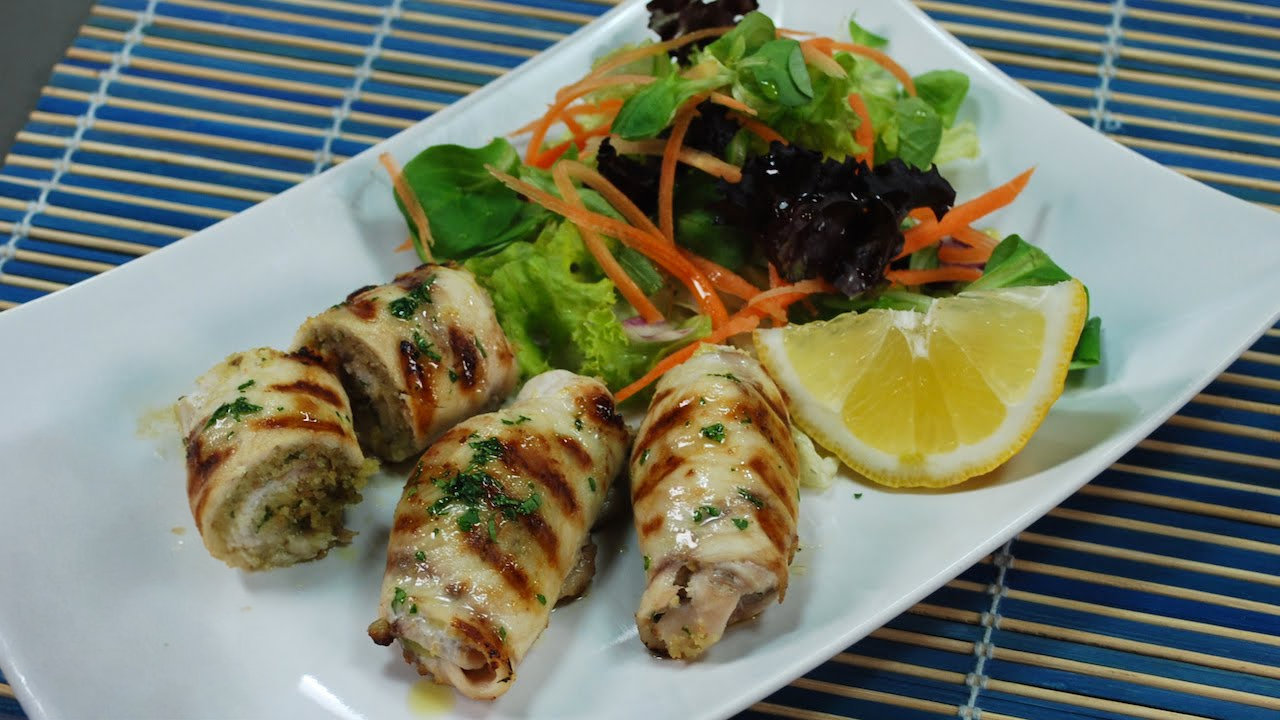
A classic that brings the flavors of the sea with the delicate touch of Sicilian cuisine. Thin slices of swordfish are filled with a fragrant stuffing: toasted breadcrumbs with olive oil, raisins and pine nuts, fresh parsley, and lemon zest.Rolled and skewered, the involtini are alternated with bay leaves that release their aroma as they cook. Just a few minutes on the grill or over coals yield a light, flavorful, quintessentially Mediterranean dish.
4. Pane Cunzato “San Vito Style”
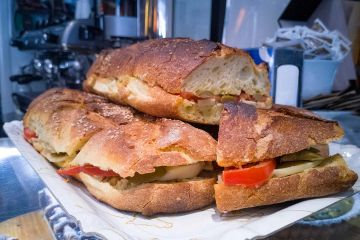
Simplicity on a plate—“dressed bread” that turns humble fare into absolute goodness. A loaf of rustic bread, ideally still warm, is enriched with extra-virgin olive oil, oregano, salt, ripe tomatoes, fresh cheese (primusale or tuma), and anchovies.Depending on the version, capers, olives, or a dusting of bottarga may be added for extra depth. It’s a quick lunch, perfect for the beach—affordable, tasty, and true to tradition.
5. Fried Ricotta Cassatelle (Custonaci/Erice Area)
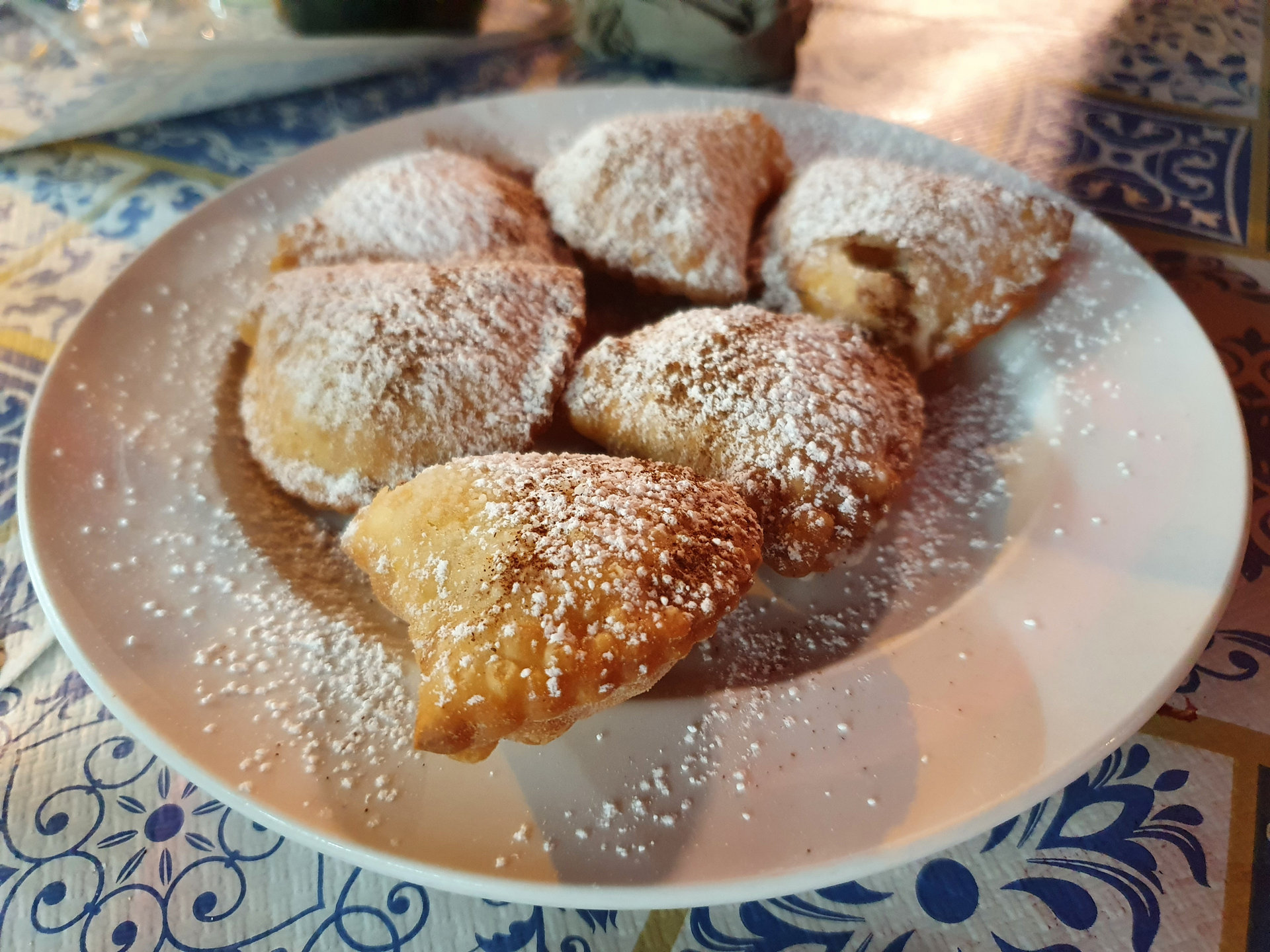
To end on a sweet note, fried cassatelle are a must. Little pockets of sweet dough (made with wine or milk) hold a heart of sweetened ricotta, brightened with candied citrus zest. Sealed and fried in hot oil until golden and crisp, they’re then dusted with powdered sugar.Typical of the Custonaci and Erice area, they’re festive desserts that win everyone over. Prefer something more delicate? Try the baked variation: the famous genovesi ericine, filled with ricotta or custard.
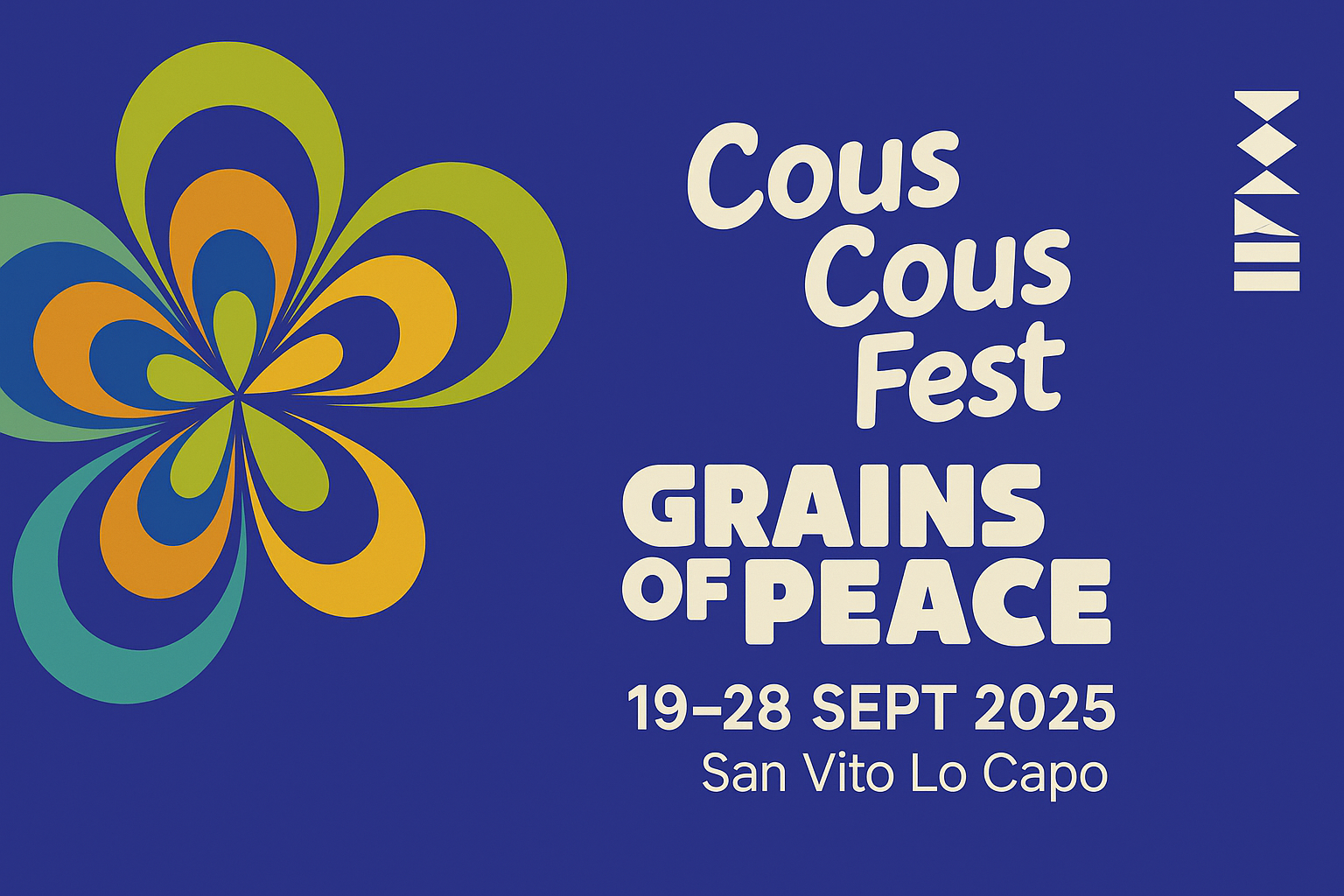
Official website:https://couscousfest.it/
Daily Program of the Cous Cous Fest
During the festival, every day the village of San Vito Lo Capo comes alive with fixed events that turn its streets and seafront into a great open-air village of taste and culture.
🍲 Cous Cous Houses
Time: 12:00 PM – MidnightWhere: Seafront, Via Regina Margherita and Via Savoia
The beating heart of the festival, the Cous Cous Houses take you on a journey through more than 20 recipes from around the world. From Trapani-style seafood cous cous to Tunisian, Moroccan, vegetarian, or gluten-free versions, every dish tells a different story and tradition. It’s a gastronomic journey from the classic to the exotic, wrapped in a colorful and convivial atmosphere.
- Tasting cost: from €12 (dish + drink + coffee or liqueur)
- Premium formula: €15 with Aperol Spritz included
Perfect for lunch, dinner, or just a tasty break any time of day until late at night.
🛍️ Expo Village
Time: 12:00 PM – MidnightWhere: Seafront, Via Regina Margherita and Via Savoia
Not only food: along the same streets you’ll find the Expo Village, a large open-air fair with over 50 exhibitors. Stalls feature colorful handicrafts, fragrant spices, Sicilian specialties, and stands from top national brands. It’s the ideal place to shop, discover local curiosities, or take home a Sicilian-scented souvenir.
- Free admission: stroll freely, browse the stands, and let yourself be guided by the colors and aromas filling the streets.
Friday, September 19 – Festival Opening
The Cous Cous Fest 2025 officially kicks off on Friday, September 19 with a day full of emotions: culinary contests, great chefs, and music under the stars.
🍴 Italian Championship Conad – First Round
6:00 PM – Bia Theatre, Piazza Santuario
The curtain rises with the Italian Championship Conad, a contest shining the spotlight on emerging culinary talents. In this first round, Antonino Mineo presents a cous cous with red prawn tartare, cuttlefish, and pea cream, while Simone Cardillo surprises with an original savory cous cous cake.
Hosted by Valentina Caruso and Tinto, ensuring rhythm and fun.
- Ticket: €20
- Note: limited seats, advance booking recommended.
🍲 Italian Championship Conad – Second Round
8:30 PM – Bia Theatre, Piazza Santuario
The challenge continues with two more contenders. Tea Orizio presents a spiced cous cous with chicken and vegetables, while Wijdane Merdad offers a truly intriguing sweet version: cous cous with cashew crumble, amlou, and yogurt foam.
Again hosted by Valentina Caruso and Tinto, guiding the audience through culinary curiosities and behind-the-scenes stories.
- Ticket: €20
- Note: limited seats.
🎶 Cous Cous Live Show – RAF in Concert
10:30 PM – Beach Stage
The first festival day closes with an unmissable free concert: RAF, an icon of Italian music. His voice will echo from the stage set up directly on the beach, in a unique setting where the sea itself becomes part of the show.
Free admission, pure energy, and the sound of a career that has made generations sing—the perfect way to open this edition of the Cous Cous Fest.
Saturday, September 20 – Young Talents, Challenges & Talks
The second day of the Cous Cous Fest is dedicated to young chefs, surprise challenges, and opportunities for reflection that tell the story of Sicily today and tomorrow.
👨🍳 Next Generation Student Contest Conad – First Round
11:30 AM – Bia Theatre, Piazza Santuario
The morning begins with the energy of students dreaming of becoming great chefs of the future. Competing are Salvatore Riina, with cous cous featuring vegetables, citrus, caciocavallo, and Sicilian spices, and Lorenzo Bonvicini, with a surprising sweet cous cous made with citrus, pears, chocolate, and vanilla.
Hosted once again by Valentina Caruso and Tinto.
- Admission: free (limited seats).
👨🍳 Next Generation Student Contest Conad – Second Round
1:00 PM – Bia Theatre, Piazza Santuario
The contest continues with two more creations: Nicoletta Celac presents an audacious black cuttlefish cous cous with salmon tartare, avocado, and mango, while Manuel Basile offers a corn cous cous with braised tempeh and tofu in Nero d’Avola—an innovative, plant-based dish that blends experimentation and flavor.
- Admission: free (limited seats).
🔪 Conad Cooking Challenge
5:30 PM – Bia Theatre, Piazza Santuario
The afternoon heats up with the Conad Cooking Challenge: a unique contest open to all cooking enthusiasts. Participants receive surprise ingredients and only a short time to improvise a dish before the audience and a special jury. Only those with creativity, composure, and skill will reach the podium.
- Admission: free (limited seats)
- How to join: open registration for the public
💬 Talk – The Best of Western Sicily
7:00 PM – Bia Theatre, Piazza Santuario
The day closes with reflection and discussion: “The best of Western Sicily: towards the creation of the DMO West Sicily.”
Speakers include the mayor of San Vito Lo Capo, Francesco La Sala; the mayor of Palermo, Roberto Lagalla; Gesap president, Salvatore Burrafato; and CoopCulture Director General, Letizia Casuccio.Moderated by Valentina Caruso.
- Admission: free (limited seats).
🍴 Italian Championship Conad – Final
8:30 PM – Bia Theatre, Piazza Santuario
The evening goes straight to the highlight: the final of the Italian Championship Conad. After days of intense competition, the chefs battle for the title and the honor of representing Italy at the XXVII Cous Cous World Championship.
The audience enjoys extraordinary dishes blending tradition and innovation in Italian cous cous. Energetically hosted by Valentina Caruso and Tinto.
- Ticket: €30
- Note: limited seats, book early.
🎶 Cous Cous Live Show – Shakalab in Concert
11:00 PM – Beach Stage
The second day closes with a musical celebration. On the beach stage, Shakalab—Sicilian band mixing reggae, hip hop, and Mediterranean sounds—set the night on fire. Their performance is pure energy, irresistible rhythms, and lyrics telling the Sicily of today.
The concert is free and open to everyone: sit on the sand or dance under the stars, with the sea as your backdrop. The perfect finale to an intense day of competitions and encounters.
Sunday, September 21 – Markets, Chef Shows & Music
Sunday at the Cous Cous Fest is filled with the scents of the sea, food, and music. The day begins with the charm of a recreated fish market on stage, continues with cooking shows by top chefs, and ends with a free concert under the stars.
🐟 Talk – Fish Auction
10:00 AM – Bia Theatre, Piazza Santuario
A unique event bringing to the stage the colors and sounds of a real fish market. The auctioneer calls out the varieties of fresh fish on display, announcing starting prices that rise until the highest bidder wins. A show that combines tradition, conviviality, and maritime culture—with the chance for the audience to purchase the day’s catch.
Promoted by the Sicilian Region – Department of Fisheries, hosted by Valentina Caruso and Tinto.
- Admission: free (limited seats).
👨🍳 Cooking Show – Nicola Bandi
1:00 PM – Bia Theatre, Piazza Santuario
Chef Nicola Bandi of Osteria Il Moro in Trapani showcases his refined cuisine in a cooking show with tasting. A chance to discover how tradition is renewed through creativity, with fish as the main star.