An Epic Adventure on Mount Etna (southern slope) by Cable Car and Jeeps: The Complete Guide to an Unforgettable Day on the Sicilian Volcano
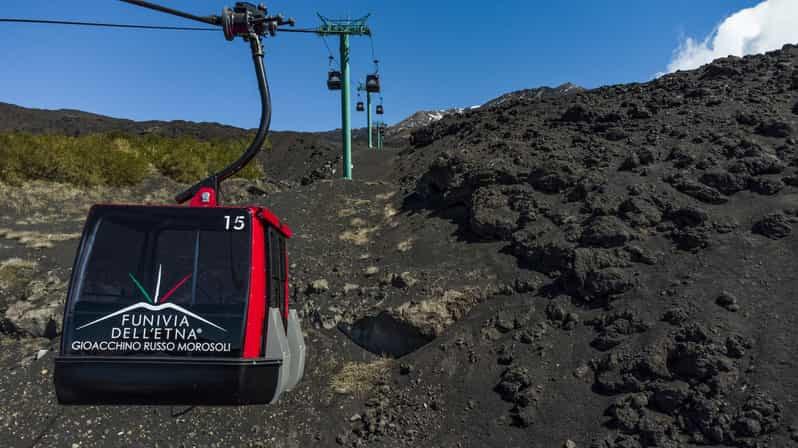
Mount Etna is not only the tallest active volcano in Europe, it’s also an iconic symbol of Sicily, an impressive force of nature that offers visitors a truly unique experience. Thanks to the Etna Cable Car, you can safely explore the volcanic slopes and summit craters, immersing yourself in a primordial landscape that feels almost otherworldly. In this post, I'll guide you through everything: from the history of the cable car to the exciting routes, experiences, and helpful tips. Get ready to find out why this journey is a must for every traveler to Sicily!
A Brief History of the Etna Cable Car
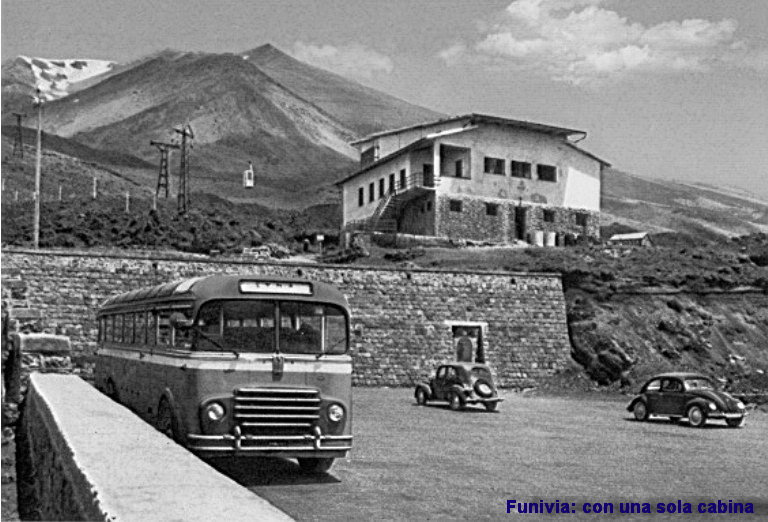
Built in 1966, the Etna Cable Car has allowed thousands to safely experience the mysterious allure of Mount Etna. The construction of the cable car was both a technical and logistical challenge, designed to withstand adverse conditions and natural events like eruptions. Over the years, the cable car has been reconstructed multiple times, including significant efforts in the '80s and '90s. Yet, the Sicilian love for their volcano and the desire to share its beauty with the world has always prevailed. Today, the cable car is a symbol of resilient and sustainable tourism, with a focus on preserving and respecting the natural beauty of Etna.
Starting Point: Rifugio Sapienza
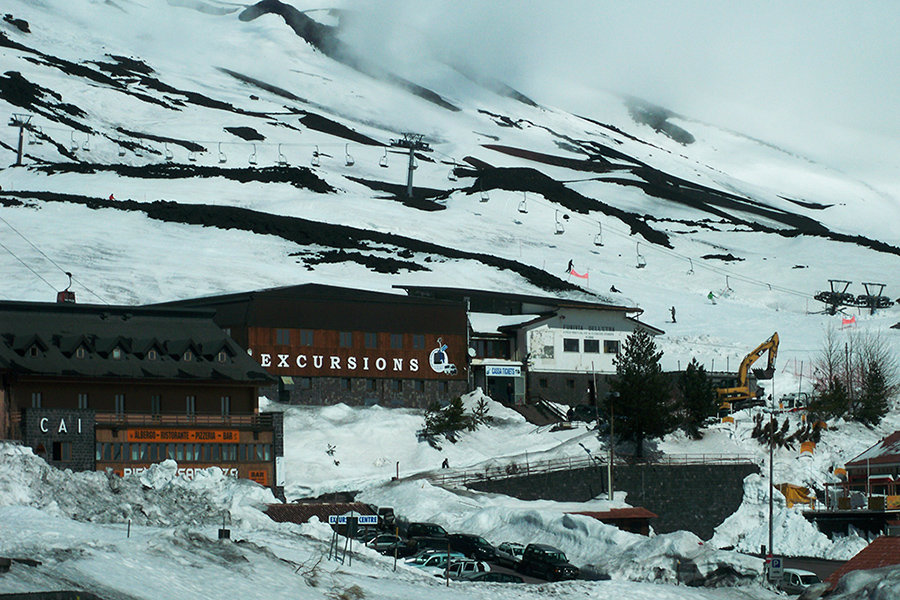
Your adventure begins at Rifugio Sapienza, located at 1,923 meters on Etna’s southern slope. Here you’ll find a visitor center, restaurants, souvenir shops, and information desks where you can purchase cable car tickets or other available tours.
- Departure Times: The cable car operates year-round, but schedules vary based on the season and weather conditions. In summer, it usually opens around 9:00 AM and closes at 4:00 PM, while in winter, hours are more limited.
- Pro Tip: Arrive early, especially during high season, to avoid long lines and enjoy Etna in the cooler morning hours.
The Cable Car Ride: Climbing to 2,500 Meters
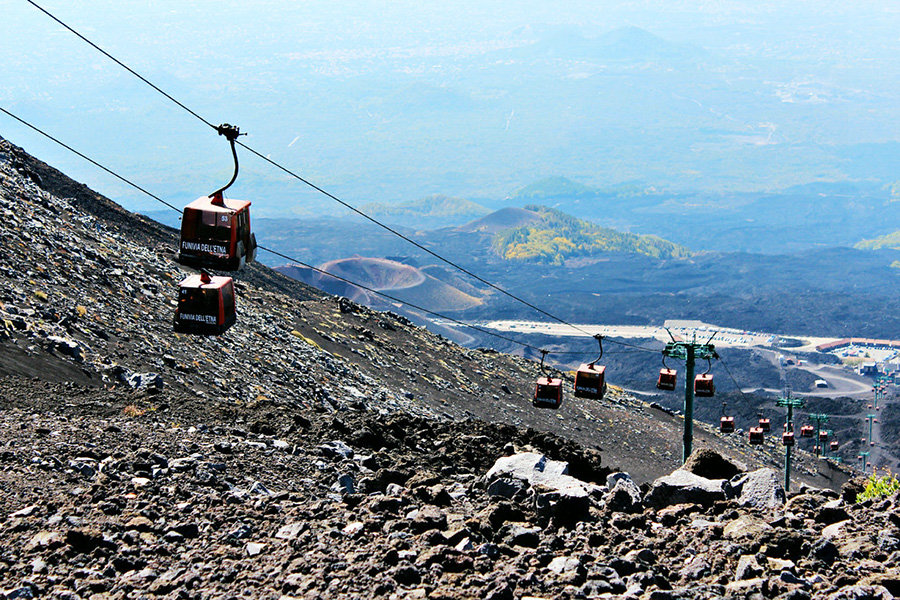
Once aboard the cable car, the magic begins: landscapes change rapidly, from ancient and recent lava flows to breathtaking views of Sicily’s eastern coast. During the 15-minute ride, the view opens up to the horizon, offering panoramas that span from the Ionian Sea to Sicily’s rolling hills.
- Elevation Gain: The cable car covers an elevation gain of 577 meters, bringing you up to 2,500 meters in just a few minutes.
- Unique Panorama: The panoramic cabins allow you to admire lava flows, craters, and the black volcanic rocks, creating a moon-like landscape.
Arriving at 2,500 Meters: Trail Options
Upon reaching 2,500 meters, you can choose from various options depending on your level of adventure:
- Free Exploration: You can explore the area around the station, taking in the craters and ancient lava flows. This more relaxed option lets you experience Etna’s atmosphere without much exertion.
Guided Summit Crater Tour (3,000 Meters): For a complete and immersive adventure, this tour combines the cable car with a 4x4 vehicle to reach 3,000 meters. Here, accompanied by an expert alpine guide, you’ll walk along summit craters, observe fumaroles, and learn about the volcano’s geological history, as well as fascinating anecdotes about past eruptions and local culture.

Excursions for Every Taste: Themed Tours
For a more memorable experience, the Etna Cable Car offers some special themed tours tailored for different types of visitors:
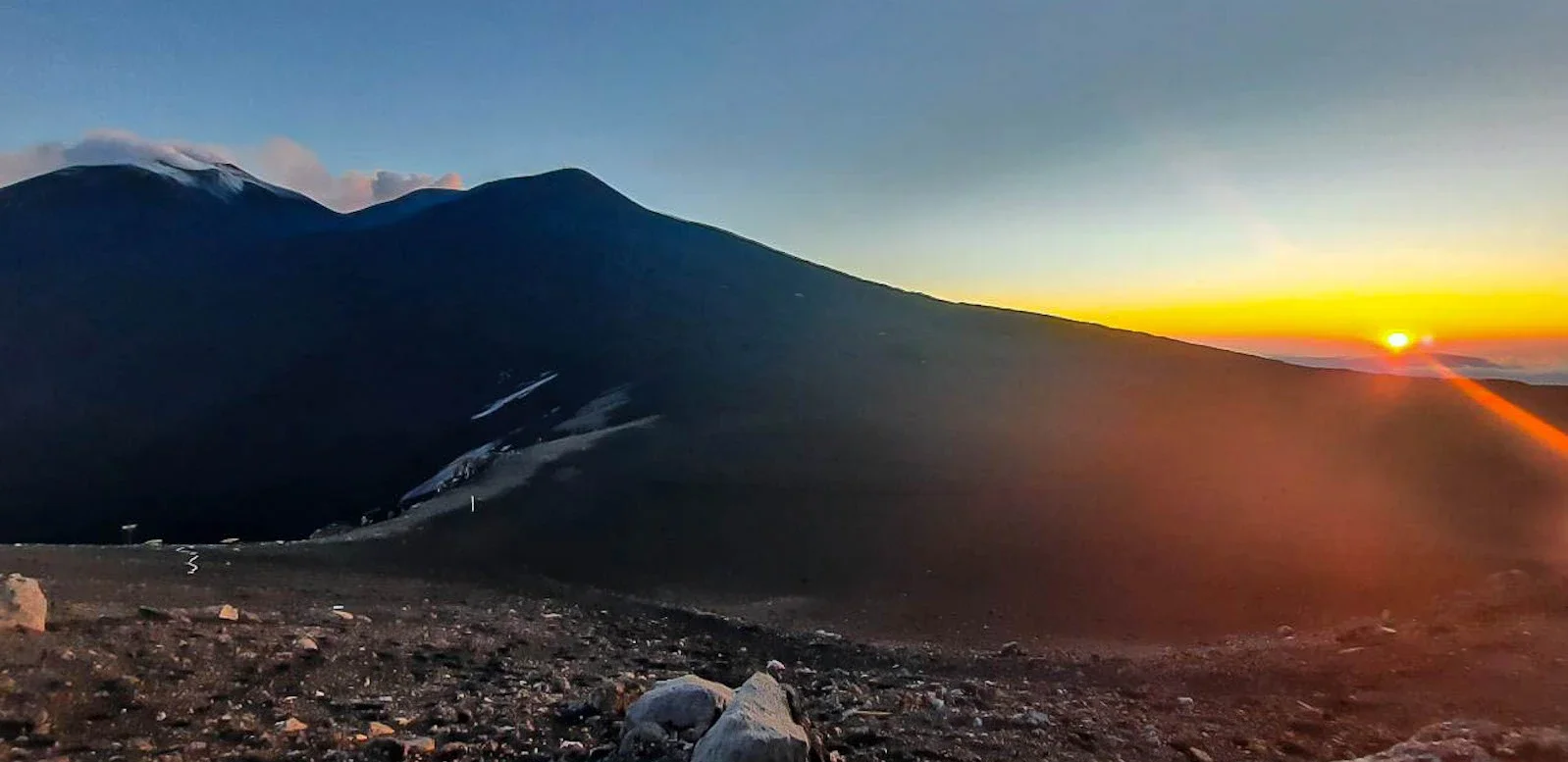
- Sunsetna Tour: A unique tour that lets you experience sunset on Etna. As the sun sets, the landscape is painted in golden and red hues, creating a surreal atmosphere. The tour includes the cable car and 4x4 ride to a scenic spot where you can watch the sunset peacefully.
- Etna by Night: For a more adventurous experience, there are special nighttime tours that depart at designated times. Here, your guide will lead you along trails lit only by moonlight, and if you’re lucky, you might see active lava flows glowing in the night.
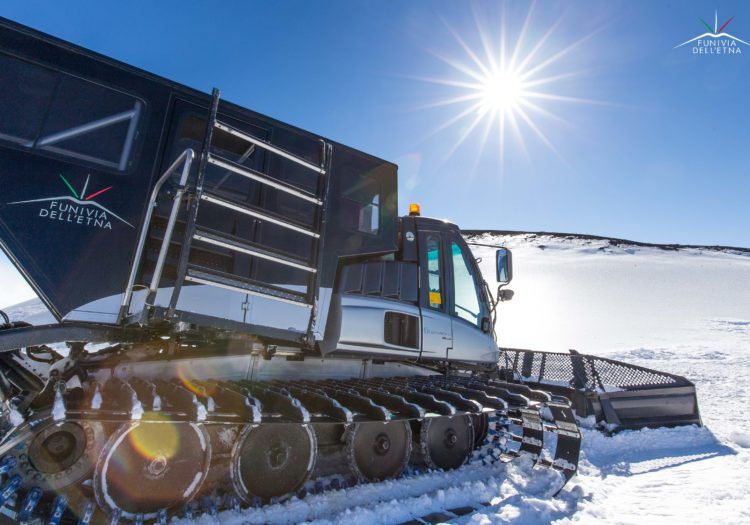
- Snowcat Tour (Winter): In winter, when Etna is snow-covered, it transforms into a ski destination! The "Snowcat Tour" is perfect for snow lovers who want to explore the volcano in a new way. A specially equipped vehicle will take you along Etna’s slopes, making the volcano accessible even in the colder months.
Practical Tips for Visitors
Before you venture up the volcano, here are some helpful tips to make the most of your experience:
- Dress in Layers: Even in summer, temperatures can be cool at these altitudes, especially in the early morning and late evening. Dress in layers and bring a windproof jacket. In winter, warm clothing, gloves, and a scarf are essential.
- Comfortable, Sturdy Shoes: The volcanic terrain is uneven and can be slippery. Wear trekking shoes or ones with a good, non-slip sole.
- Water and Snacks: The air is dry at these altitudes, so bring a bottle of water and some energy snacks, especially if you’re planning on longer hikes.
- Reservations and Tickets: You can buy tickets directly at Rifugio Sapienza, but booking online is recommended, especially during peak season. The official website lets you choose your preferred time slot and ensures your spot.
Ticket Prices and Available Packages
Prices vary based on the chosen tour:
- Base Tour to 2,500 Meters: Approximately €50 for adults and €30 for children aged 5-10.
- 3,000 Meter Tour (including cable car and 4x4): Approximately €78 for adults and €50 for children.
- Sunsetna and Night Tours: Prices vary and are generally higher than the base tour; always check the official website for updated rates.
What to Expect at the Summit: Nature, History, and Geology
Arriving at 3,000 meters on Mount Etna is like stepping onto another planet. The landscape is rugged, almost otherworldly, with vast stretches of blackened rock and ash contrasting sharply against the Sicilian sky. Here, you’re surrounded by the raw power of nature: active craters emitting fumaroles (gas and steam), recent lava flows that have hardened into bizarre formations, and a desolate terrain where plant life struggles to survive. This dramatic scene has earned Etna its nickname, the "Mongibello"—a combination of Latin and Arabic that translates to "Mountain of Mountains."
1. The Craters: Etna’s Ever-Changing Face
The summit area is marked by numerous craters, each with its own history of eruptions, collapses, and re-formations. Your guide will introduce you to some of the most notable ones:
- The Bocca Nuova and Voragine Craters: These are two of the main summit craters and are known for their explosive activity and stunning lava fountains during eruptions. Bocca Nuova, formed in 1968, is particularly active and continues to reshape itself.
- The Northeast Crater: This is the oldest and highest of the summit craters, with periods of intense activity that often release clouds of ash and gases.
- The Southeast Crater: One of the youngest craters, it has grown significantly in recent years due to frequent eruptions and is responsible for many of Etna’s lava flows.
Each crater is a story in itself, representing different types of volcanic activity. From Strombolian eruptions (featuring intermittent explosive bursts) to effusive eruptions (where lava flows more smoothly down the slopes), these craters showcase the diverse behavior of Etna.
2. The Geology: Ancient and Ongoing Forces
Mount Etna’s summit offers a rare view into ongoing geological processes. Your guide will explain how Etna formed approximately 500,000 years ago, beginning as a submarine volcano and gradually rising to become the towering peak it is today. The mountain’s volcanic layers reveal countless eruptions that have built and reshaped it over millennia, creating a stratovolcano—a type of volcano characterized by its steep profile and layers of hardened lava and ash.
The geology of Etna is dynamic, shaped by the interaction between tectonic plates and magma chambers. The African and Eurasian tectonic plates meet near Sicily, creating fractures in the Earth's crust that allow magma to rise, fueling Etna’s eruptions. At 3,000 meters, you can see evidence of these processes in the cracked and fissured ground, where heat from the magma below still seeps through.
3. The Colors and Textures of Etna: A Lunar-Like Landscape
The summit area is defined by dark volcanic rock, reddish-brown ash, and patches of bright yellow sulfur deposits. The sulfur, emitted by volcanic gases, crystallizes around the vents, adding bursts of color to the otherwise dark terrain. The ground feels brittle in some places and is dotted with pumice stones and volcanic bombs—solidified pieces of lava ejected during eruptions.
Depending on recent activity, you may even encounter fresh lava flows, still warm to the touch, with their glassy surfaces and sharp edges. This intense landscape, with its rich mix of textures and colors, is a paradise for photographers, offering unique perspectives with every step.
4. The Elemental Sounds and Smells of the Summit
Mount Etna is not only a visual spectacle; it also engages the other senses. You’ll notice the sound of the wind sweeping across the barren ground and the subtle hissing and gurgling noises from fumaroles. The air is tinged with the unmistakable scent of sulfur, which mixes with the crisp mountain air, adding to the surreal atmosphere.
5. The Views: An Unparalleled Panorama
On clear days, the summit offers a panoramic view stretching across much of eastern Sicily, with the Ionian Sea to one side and rolling hills and valleys to the other. From this height, you can see other ancient lava flows snaking down the mountainside and, in some areas, the contrasting green of pine and oak forests that managed to establish themselves on older, fertile lava.