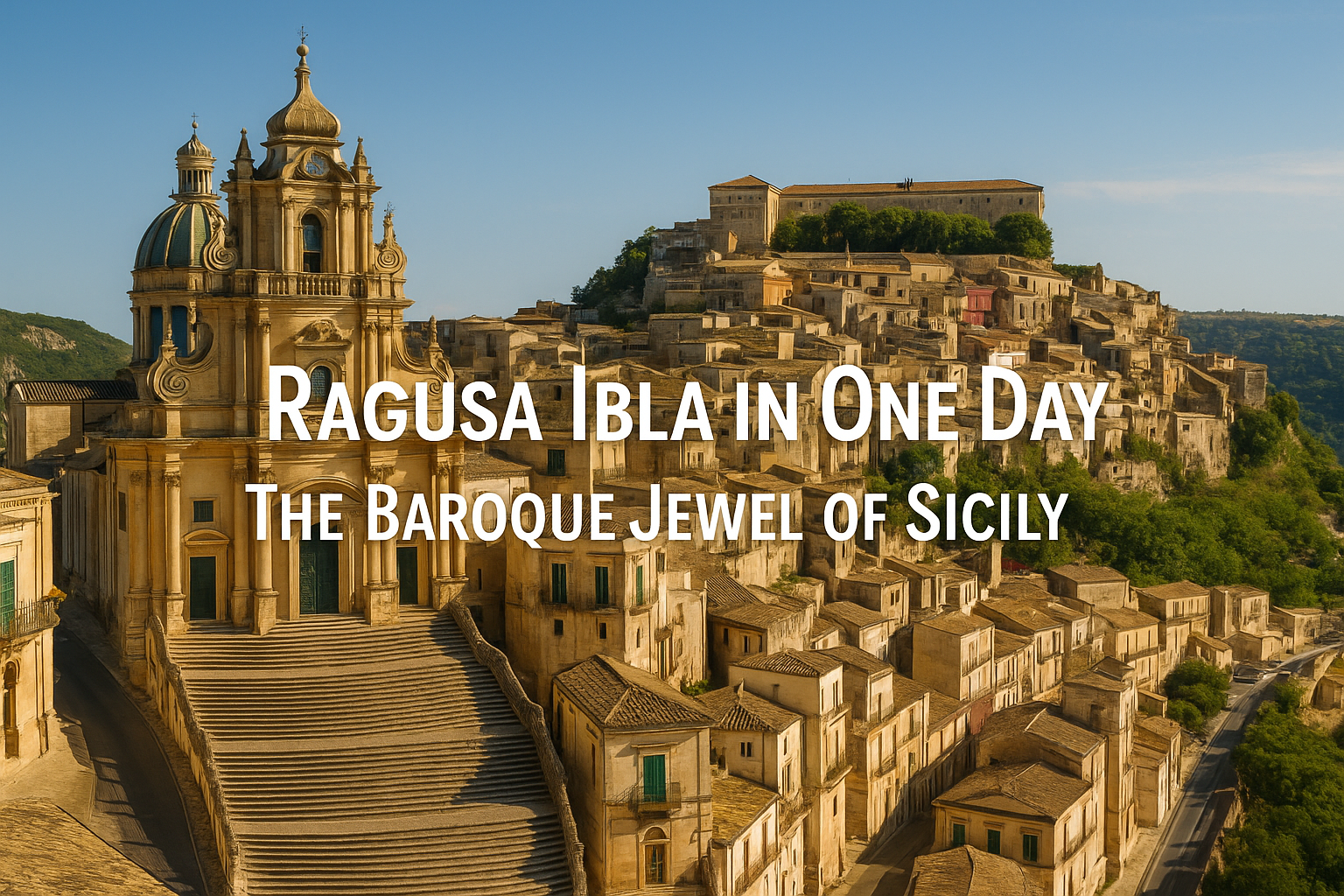
🥰 Welcome to the Baroque Heart of Sicily – Today, I’m taking you to Ragusa Ibla
There’s a place in Sicily where time seems to stand still — among golden stone, the scent of carob trees, and baroque façades gleaming under the sun. That place is Ragusa Ibla, a district that’s more than just a historic center; it’s an open-air stage where every corner tells a story and every step reveals an emotion.
In today’s post, I’ll guide you through how to explore Ragusa Ibla in just one day, with an itinerary designed to help you experience the very best of this Sicilian gem: majestic churches, noble palaces, secret gardens, panoramic stairways, and — of course — unforgettable culinary stops.
Whether it’s your first time in Ragusa or you’re returning once again, I promise inspiration, hidden corners, and practical tips to help you enjoy the town stress-free and with eyes wide open to beauty.
So grab some comfy shoes, charge your camera, and get ready to be enchanted — we’re off to Ragusa Ibla, the baroque soul of the Val di Noto!
🏛️ Duomo di San Giorgio – The Baroque Heart of Ragusa Ibla
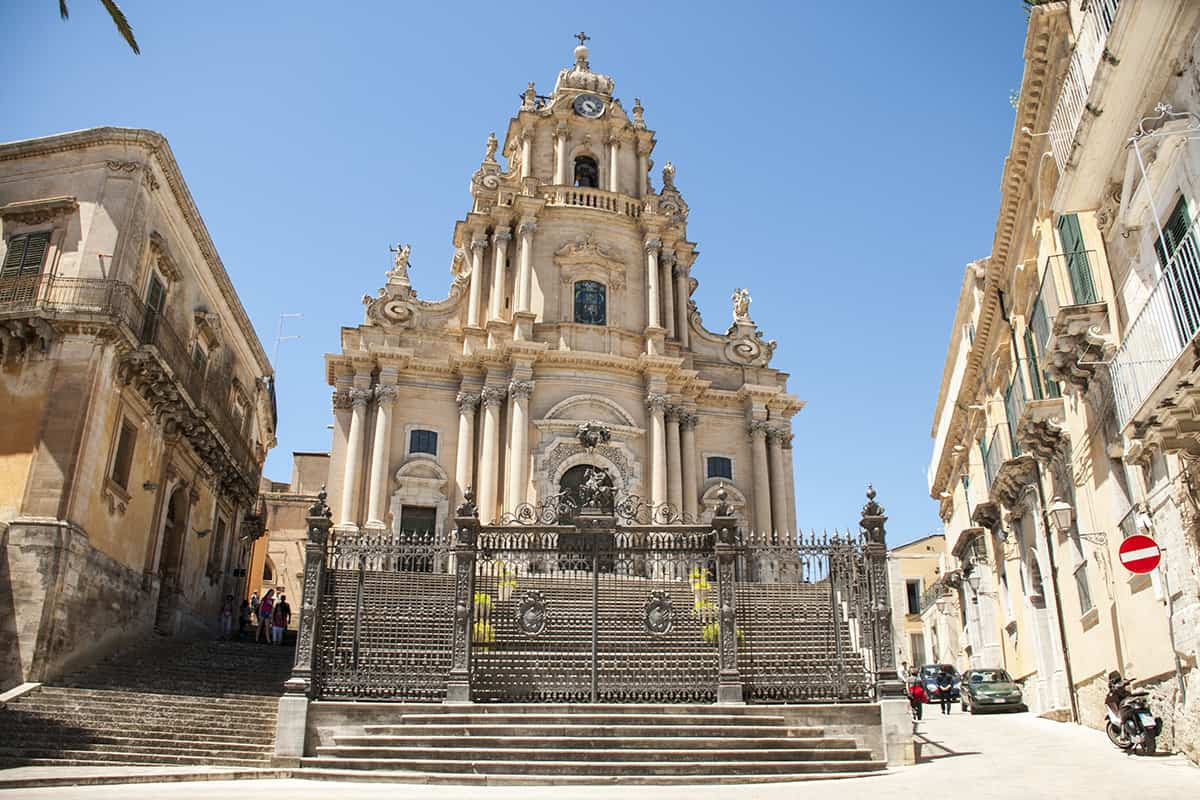
You simply can’t talk about Ragusa Ibla without starting with its most iconic landmark — the place that captures every visitor’s gaze and heart: the Duomo di San Giorgio. But this isn’t just a church. It’s a love letter to Sicilian Baroque, an architectural masterpiece suspended between stone and sky.
Dramatically set at the top of a grand staircase and nestled among elegant piazza buildings, the Duomo is easily one of the most striking and photogenic churches in all of Sicily. Its curved, vertical façade is a triumph of balance and movement. Layered columns, sculpted niches, ornate portals — all contribute to a composition that’s both harmonious and monumental. It’s no coincidence that it was designed by Rosario Gagliardi, the Baroque genius behind many of Val di Noto’s most beautiful towns like Noto, Modica, and Scicli.
Built beginning in 1739 on the ruins of a previous church destroyed by the devastating 1693 earthquake, this cathedral perfectly embodies the Baroque rebirth of the island, where faith, art, and theatrical beauty come together. Its iconic dome, completed in 1820, rises from a cylindrical drum and dominates the town’s skyline like a glowing lantern — visible from nearly every point in Ibla. At night, illuminated, it’s simply magical.
Inside the Cathedral: Sobriety and Light
The interior of the Duomo is surprisingly understated compared to its dramatic exterior. Three naves, dark stone columns, marble details, and side altars create an elegant, luminous space, where your eye is naturally drawn to the high altar. Here you’ll find a revered relic: the arm of Saint George, the city’s patron saint, venerated with deep devotion.
Above the altar, the large pipe organ and stained-glass windows filter light in a way that creates almost mystical atmospheres, especially during the early afternoon hours.
Insider Tips 👀
- Stand at the center of the square, at the base of the staircase, for a vertical shot that captures the entire façade — it’s one of the most loved angles by photographers and Instagrammers.
- If open, climb up to the dome for a 360° panoramic view that’s absolutely breathtaking.
- Don’t rush your visit inside — take at least 15–20 minutes to walk around, take in the details, and enjoy the peaceful atmosphere.
🌿 Giardino Ibleo – The Green Refuge of Ragusa Ibla
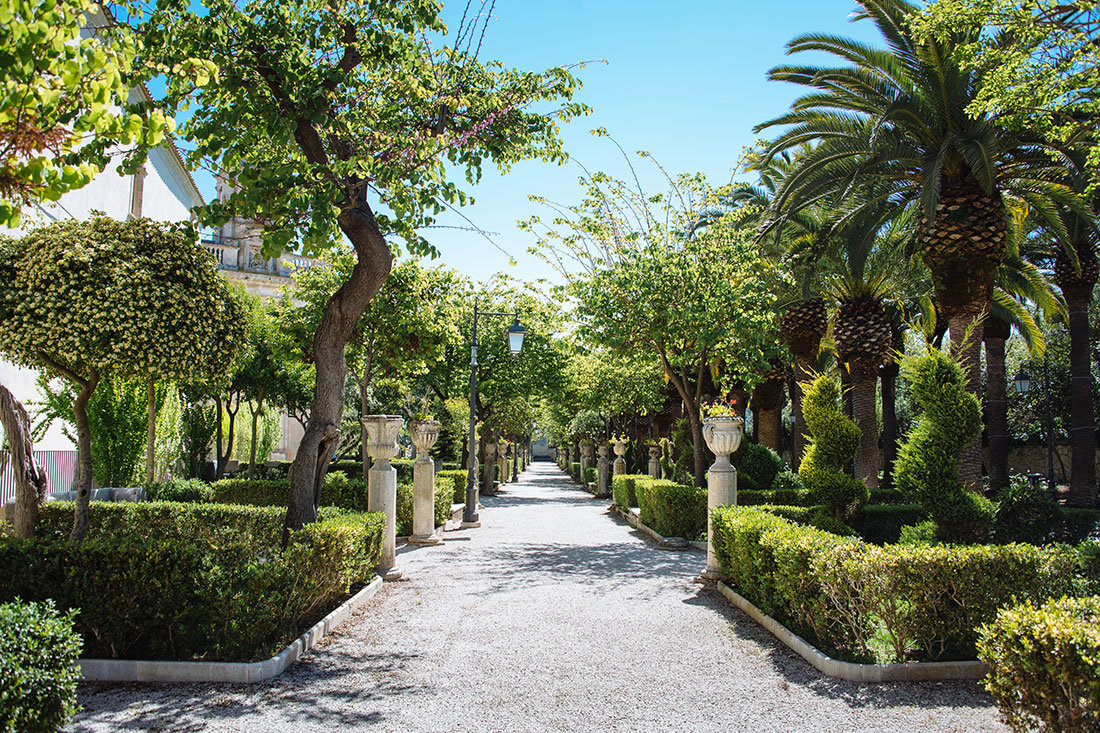
If Ragusa Ibla is a baroque stone labyrinth, then Giardino Ibleo is its secret oasis — the place where the city slows down, softens, and breathes. Located at the eastern edge of the historic center, this beautiful public garden offers moments of peace, breathtaking panoramic views, and a surprising immersion in greenery, surrounded by palms, manicured hedges, and elegant paths.
Commissioned in the second half of the 19th century by local aristocrats as a public promenade, it remains today one of the most charming historic green spaces in southeastern Sicily. At the entrance, a scenic wrought iron gate opens onto geometric pathways flanked by ancient trees, fountains, blooming flowerbeds, and shaded benches — perfect for relaxing during a full day of exploration.
But Giardino Ibleo is not just about vegetation — it’s also a compact concentration of art, history, and spirituality.
Hidden Churches Among the Green
Inside the garden, you’ll find three small historic churches:
- Church of San Giacomo Apostolo, built with local stone, with a simple yet striking façade.
- Church of the Capuchins, adjacent to the former convent, now housing the public library.
- Church of San Domenico, lesser-known but full of timeless charm.
Walking among these sacred buildings feels like entering a quiet parallel world, where nature and spirituality coexist in perfect harmony.
Panoramic View Over the Irminio Valley
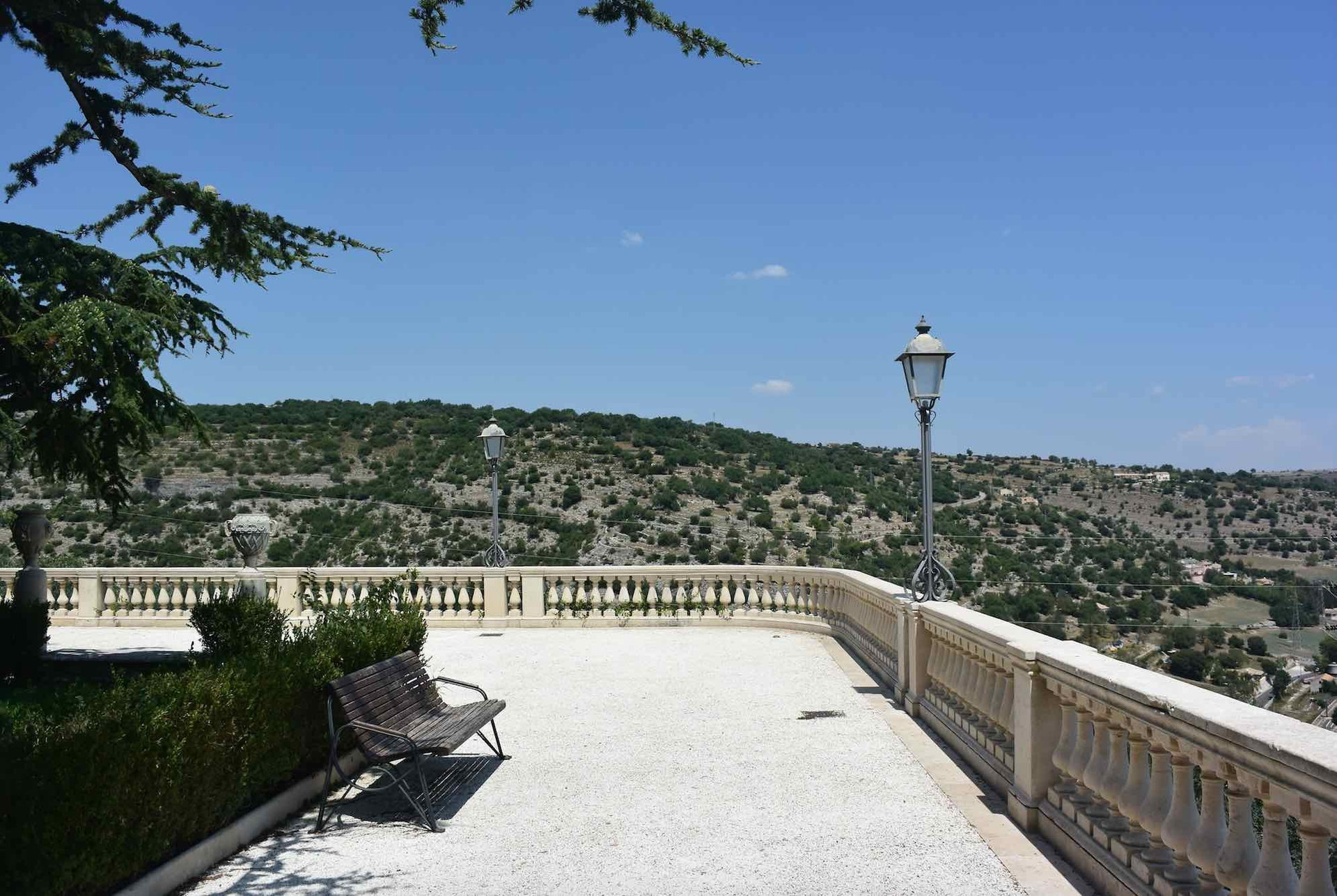
One of the garden’s most spectacular corners is the panoramic terrace overlooking the Irminio Valley. From here, the view stretches across silent hills, terraced fields, and ancient paths winding through the landscape. At sunrise and sunset, light filtering through the trees and lighting up the valley creates one of the most poetic moments of the day.
A Word of Advice: Slow Down
This is the perfect place to pause. After climbing stairs and wandering through narrow alleys, Giardino Ibleo is the ideal spot to:
- Read a book in silence
- Enjoy a granita on a bench
- Take photos at your own pace
- Let yourself be surprised by birdsong and the scent of lavender
Giardino Ibleo isn’t just a stop — it’s a breath of fresh air within your journey.An invitation to slow down, to reflect, and to rediscover simple beauty.
Let me know if you’d like to add a map with the garden’s highlights or an in-depth guide to the churches!
🏰 The Noble Palaces of Ibla – Baroque Elegance in Living Stone
Wandering through Ragusa Ibla feels like stepping into a historical novel written in stone, where every doorway tells the story of a family, every balcony hides a secret, and every grotesque mask seems to whisper something in your ear. The noble palaces of this district are the dramatic backdrop of an era when art, power, and theatricality walked hand in hand.
Among the many, two stand out for their beauty, location, and timeless charm: Palazzo Arezzo di Trifiletti and Palazzo Cosentini.
🏛️ Palazzo Arezzo di Trifiletti – The Quiet Elegance of Sicilian Aristocracy
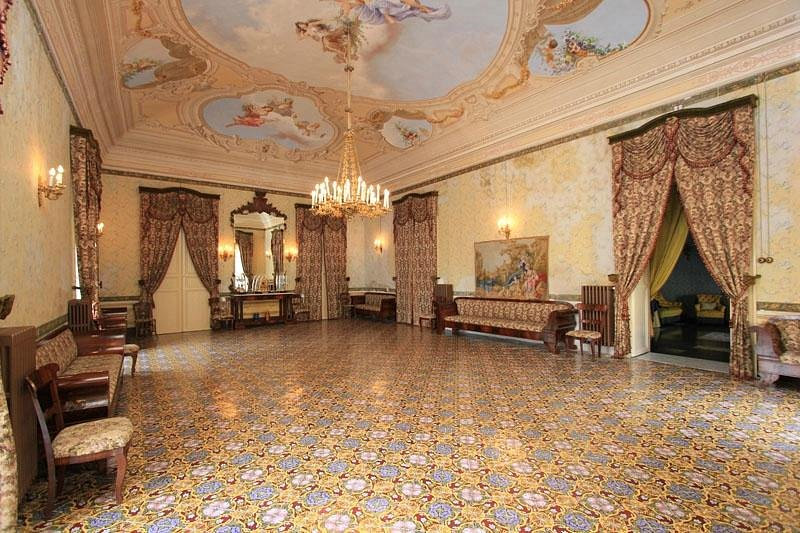
Located at the top of Piazza Duomo, Palazzo Arezzo di Trifiletti greets you with a refined, neoclassical façade. But the real enchantment begins once you step through the door. Still inhabited by the descendants of the Arezzo family, the palace is a beautifully preserved treasure chest of antique interiors: frescoed halls, majolica-tiled floors, original furnishings, porcelain collections, and elegant 19th-century décor.
Visits are available by appointment, often guided by the owners themselves — a rare, authentic experience that lets you not only admire the architecture but also hear personal stories, historical anecdotes, and insights into aristocratic Sicilian life.
From the main salon, a balcony offers a privileged view over the Duomo of San Giorgio — an exclusive perspective few ever see.
If you love the atmosphere of historic residences, this palace will give you a small journey through time, among velvet chairs, golden mirrors, and noble silence.
🗿 Palazzo Cosentini – Where Baroque Becomes Theater
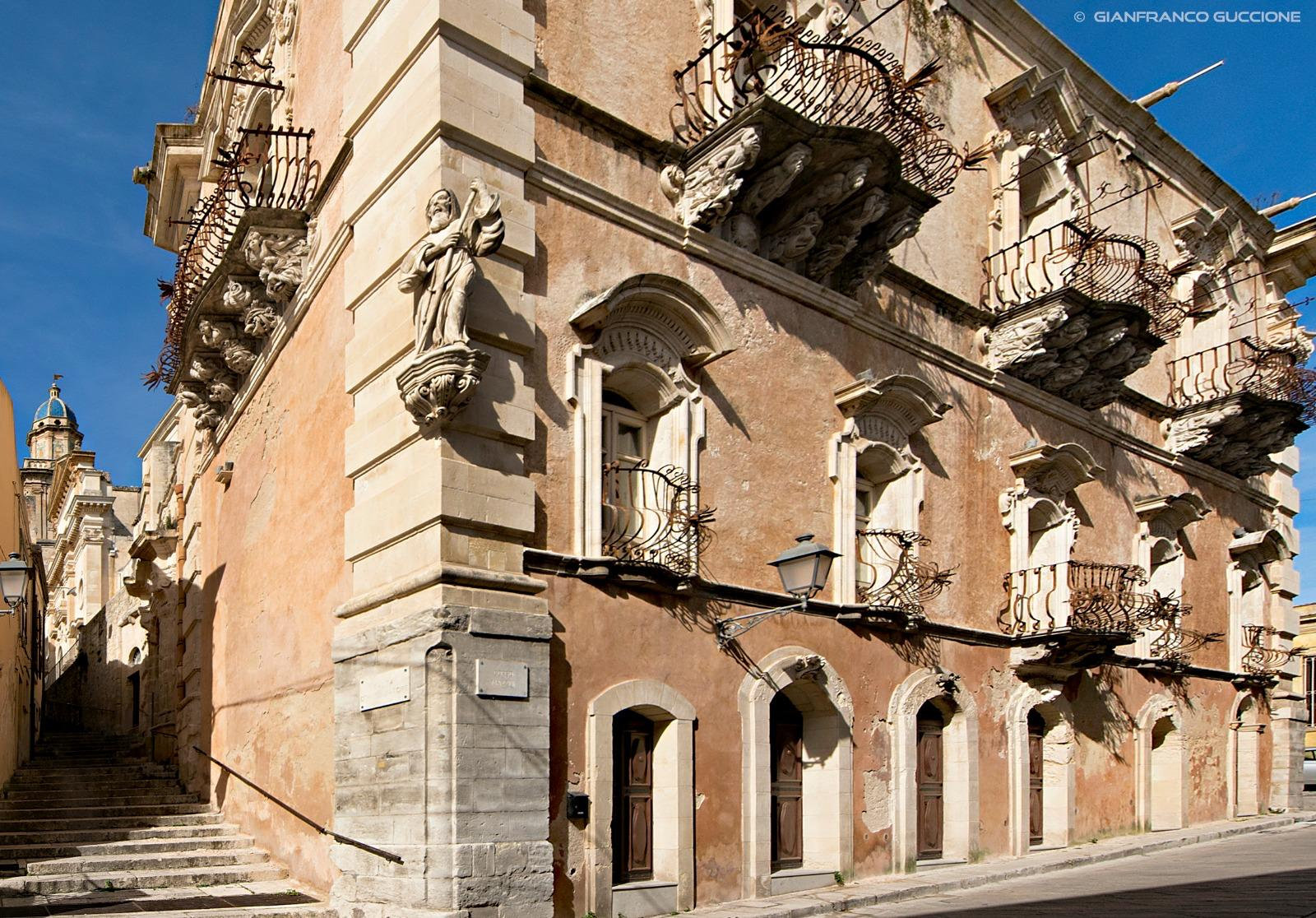
Less intimate but visually far more theatrical, Palazzo Cosentini sits at a corner where several scenic streets of Ibla intersect — impossible to miss. It’s here that Sicilian Baroque reaches one of its most grotesque and dramatic expressions.
Its famous balconies, supported by sculpted corbels, are among the most photographed in the city: comedic figures, mythical creatures, deformed faces, and caricatured masks literally “carry” the wrought-iron balconies, with an effect that is at once humorous and haunting.
These grotesques, typical of the more whimsical side of Sicilian Baroque, also had a symbolic function — they represented vices, fears, and invisible forces to be kept away.
Though the interior is not always open to the public, the real marvel is the façade itself: a "talking" wall that tells stories through stone, full of allegory and social satire. Look at it from different angles, get closer, notice the expressions — each balcony is a story in itself.
Tip for Detail Lovers 👀
Between these two palaces, there’s one of the most atmospheric alleys in Ragusa Ibla, often missed by tourists. Stop there, in the warm light of late afternoon, under the shadow of ancient arches, and look up — you’ll see the baroque soul of the city come alive before your eyes.
⛪ Baroque Churches and Scenic Views – The Sacred (and Photogenic) Soul of Ibla
Ragusa Ibla is a sacred mosaic made of stone, light, and faith. Around every curve, at the top of each slope, or at the end of a narrow alley, a church suddenly appears — small or grand, hidden or celebrated, but always dramatic. This is where Sicilian Baroque becomes spiritual, intimate, theatrical.
And if you love photography, architecture, or simply losing yourself in beauty and silence, get ready: every corner is a natural stage.
🌄 Santa Maria delle Scale – The Balcony of the Soul
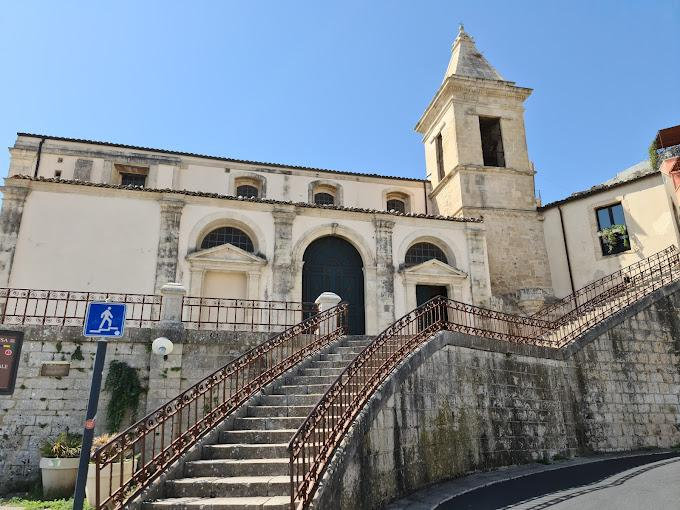
This is not just a church — it’s a lookout onto the infinite. Located halfway between Ragusa Superiore and Ibla, Santa Maria delle Scale is a must-stop for anyone walking down the historic staircase. Built in the 14th century in Cistercian-Gothic style, then reshaped in Baroque after the 1693 earthquake, it’s a perfect example of dialogue between eras and styles.
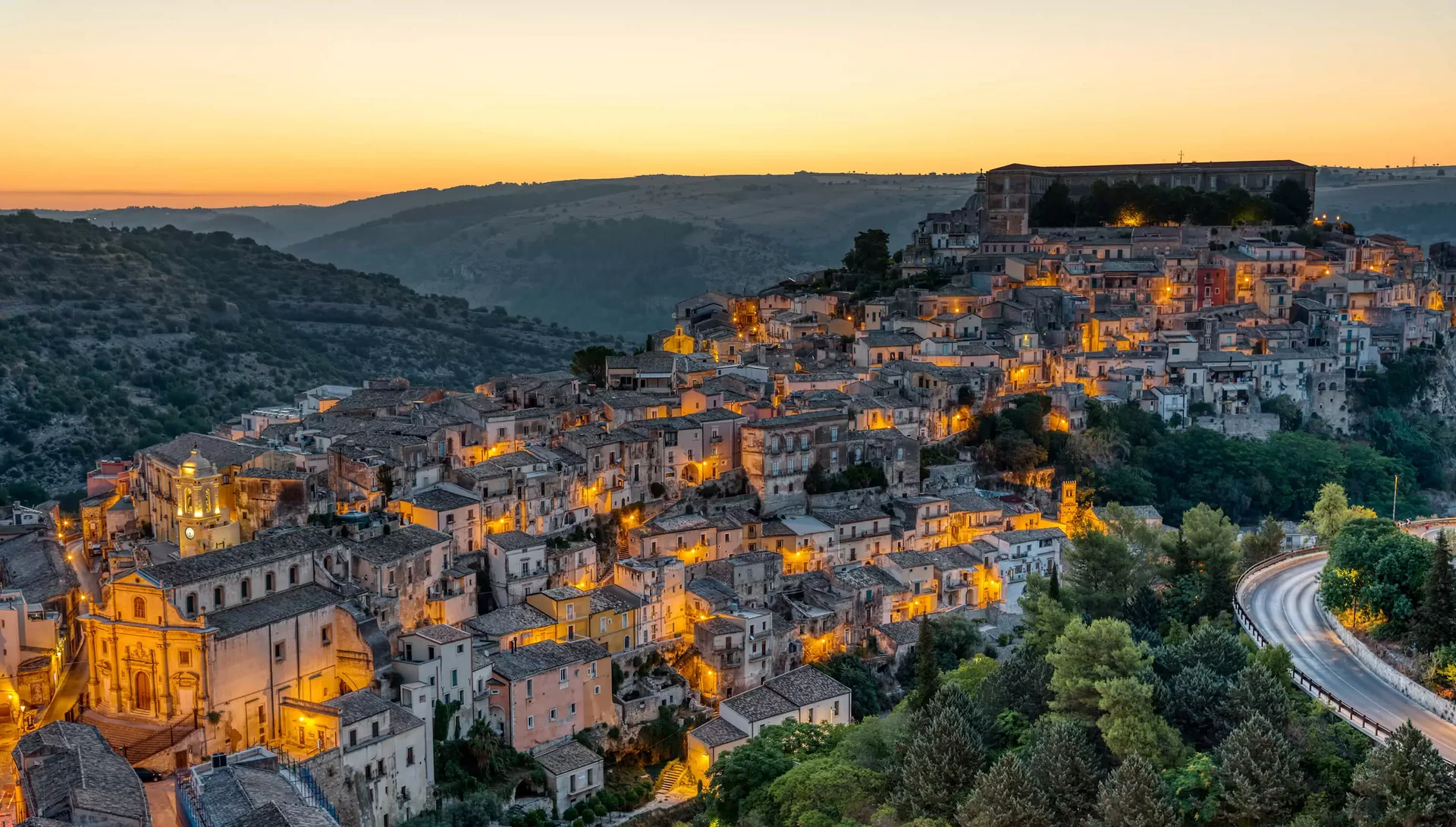
But the real show is outside: from its terrace unfolds one of the most breathtaking views in Sicily. You see all of Ibla’s historic center, with the Duomo rising in the distance, and a sea of terracotta rooftops and golden stone descending into the valley. At sunrise or sunset, it becomes a mystical moment — silence, warm light, and that postcard-perfect image that stays with you.
🔥 Church of the Souls in Purgatory – Mystery in Living Stone
Not far from Ibla’s heart, tucked between houses like a hidden gem, stands the Church of the Souls in Purgatory — one of the most intriguing and atmospheric churches in town. Having survived the great earthquake, it still preserves its original 17th-century layout, with a modest, almost austere façade, adorned by a symbolic sculpted portal.
Inside, the atmosphere changes: dim light, marble accents, side altars, and a profound sense of reverence. Dedicated to the suffering souls of Purgatory, the church exudes an intense, almost raw spirituality — built on whispers, candlelight, votive offerings, and whispered prayers. It tells the story of popular devotion in its most heartfelt form.
🔵 Santa Maria dell’Itria – The Blue Dome of the Jewish Quarter
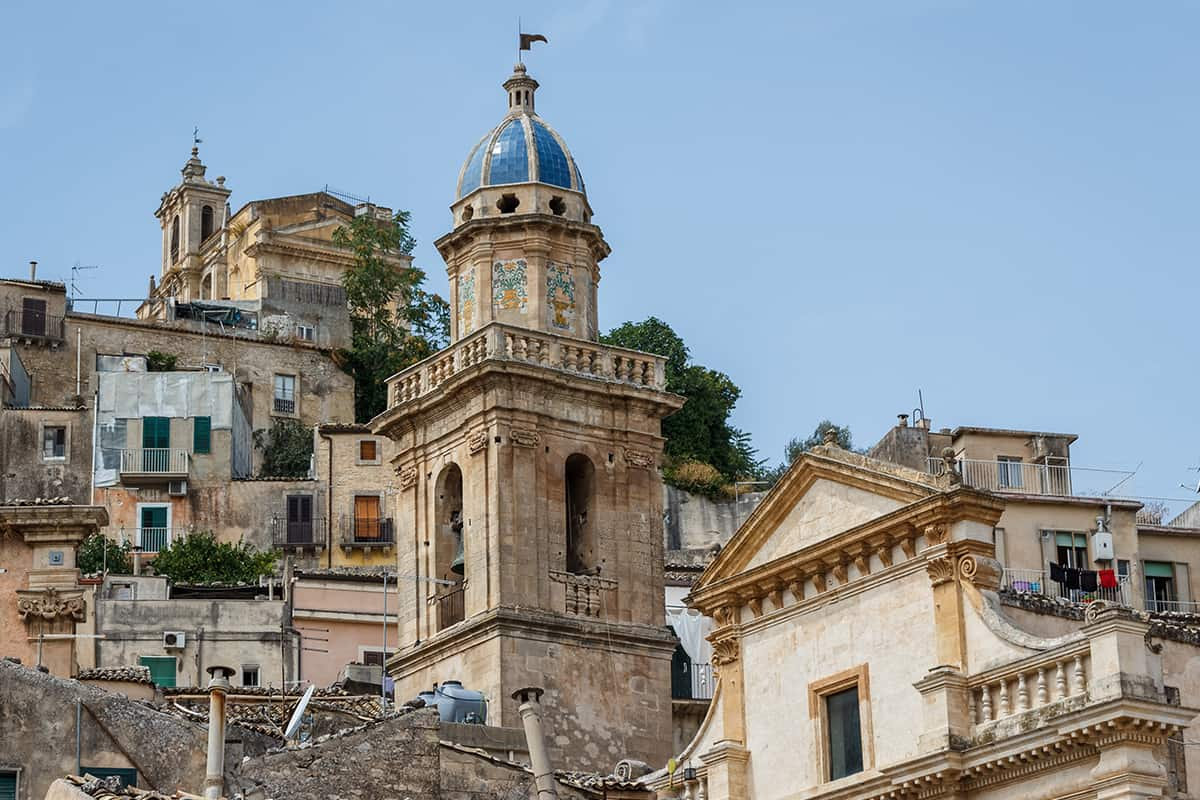
Hidden in the maze of what was once Ibla’s Jewish quarter, Santa Maria dell’Itria catches your eye with its vibrant blue and green majolica-tiled dome — visible from afar like a colorful beacon rising from the stone rooftops.
Rebuilt in the 18th century, the church is a small baroque jewel, with elegant decorations and an intimate atmosphere. But it’s that iconic dome that steals the scene — especially when viewed from above or through a narrow alley. Against the deep blue sky and golden stone, it creates a postcard-perfect frame.
It’s also one of the most loved spots by painters and photographers, for that blend of sacred art and urban setting that enchants even the non-religious.
📷 The Right Advice: Wander Without a Map
Between one church and another, don’t follow your map too strictly. Ragusa Ibla is best discovered with your eyes lifted, as you lose yourself in its alleys, chasing light, shadows, and reflections that climb across the stone in the late afternoon. Every corner is a photographic set — but also a doorway into the soul of a city that is slow, noble, and deeply authentic.
📸 The Best Viewpoints – Where Ragusa Ibla Shows Off Its Full Beauty
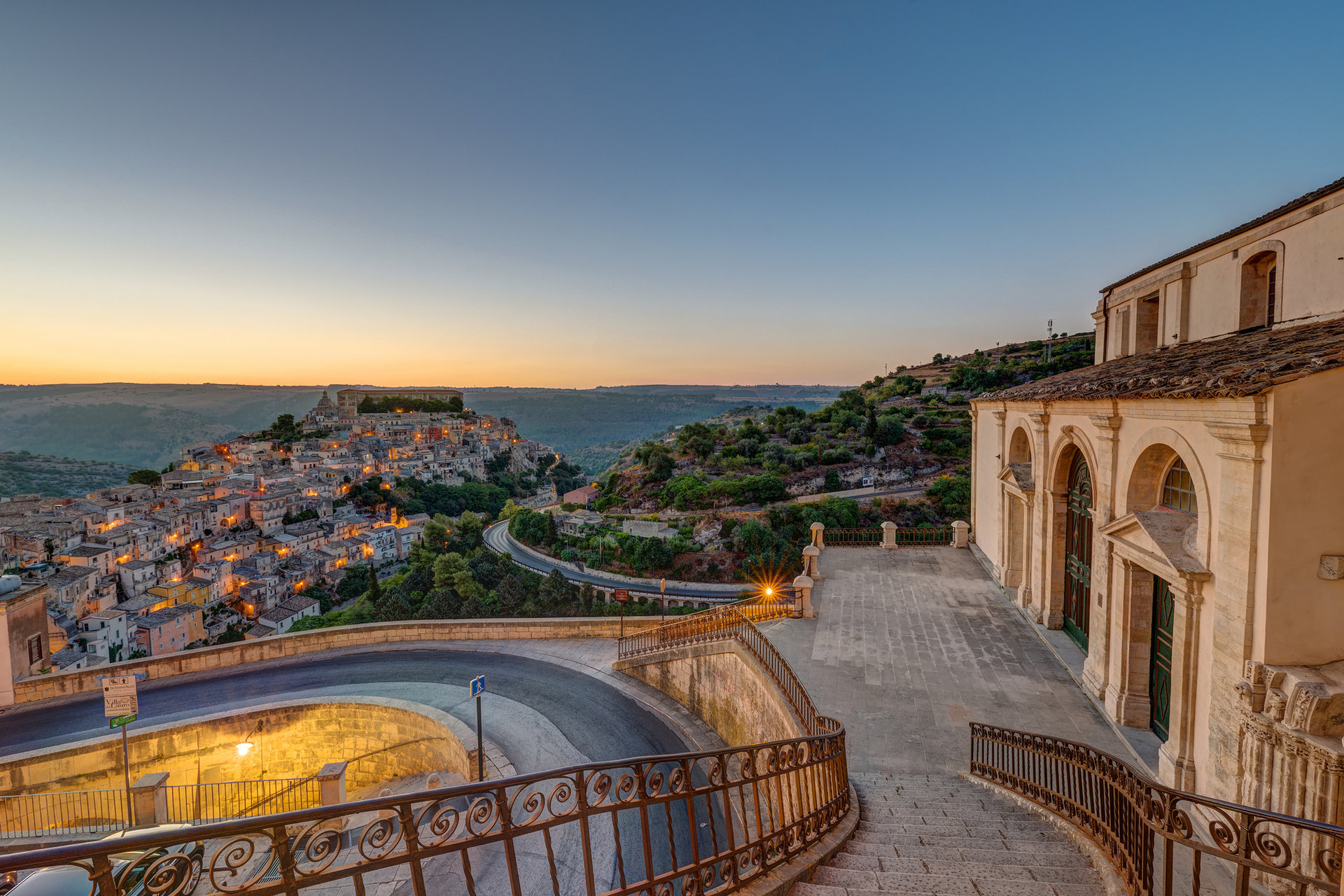
There’s something Ragusa Ibla does better than any other baroque city in Sicily: it captivates from above. Not just when you’re within it — among its alleys and churches — but especially when you step back and take it all in from afar, suspended like a nativity scene carved into the hillside.